C3PAO Assessment Preparation for CMMC Level 2 Certification
You've done the work. Now make sure it holds up when the assessor arrives.
Schedule Your Pre-Assessment ReviewC3PAO assessment preparation is the final readiness phase before a defense contractor undergoes a formal CMMC Level 2 certification review by a Cyber AB-authorized Certified Third-Party Assessment Organization. Consilien prepares Southern California defense contractors and manufacturers for C3PAO assessment through mock assessments, evidence verification, personnel readiness, and SSP accuracy checks — working as the preparation consultant so the C3PAO can serve as the independent assessor.
You're closer than most.
Most of the 80,000 defense contractors who need CMMC Level 2 certification haven't done the work you've done. They haven't completed a gap assessment, built an SSP, established an evidence collection cadence, or addressed their documentation architecture. You have. The controls are in place. The documentation exists.
Now comes the part that decides whether it all holds up.
A C3PAO assessment is a formal independent evaluation by a Cyber AB-authorized organization. It runs three to five days on-site. The assessors verify all 110 NIST SP 800-171 controls through Examine, Interview, and Test methods across 320 assessment objectives. They'll review your SSP entry by entry, interview the personnel named as control owners, and test whether the controls operate the way the documentation says they do.
Assessment fees run $31,000 to $150,000 depending on scope and organizational complexity, per IBSSCORP's April 2026 cost analysis. A failed assessment adds $15,000 to $50,000 in reassessment fees and a 3 to 6 month delay before you can reschedule, according to CISPOINT's February 2026 industry analysis. Many C3PAOs are already booked through the end of 2026. Some projections suggest wait times could exceed 18 months by Q3 2026 as Phase 2 demand hits.
Failing isn't just expensive. It's a contract eligibility problem.
See the full CMMC compliance program this readiness work connects to
What the C3PAO Actually Does During Assessment
Most contractors have a general sense of what a C3PAO assessment involves. Fewer understand what the assessors are specifically looking for at each stage — and which preparation gaps create the most common adverse determinations.
A C3PAO is a company authorized by the Cyber AB to conduct official CMMC Level 2 assessments and submit results to the DoD's eMASS system. Only Cyber AB-authorized C3PAOs produce valid CMMC Level 2 certifications. A cybersecurity consultancy, an MSP, an RPO — none of these produce a valid certification regardless of how thorough their readiness work is. The organization that prepares you and the organization that assesses you must be separate entities. That separation is a regulatory requirement under the CMMC framework.
The assessment follows four phases.
Pre-assessment: The C3PAO's Lead Assessor reviews your SSP, confirms assessment scope, and conducts a readiness review to determine whether your organization is prepared to proceed. An adverse readiness determination here means the formal assessment doesn't start, but you still owe the C3PAO their time. This is the phase a mock assessment is designed to catch problems before.
Formal assessment: The C3PAO team evaluates all applicable controls through Examine, Interview, and Test. They hold daily briefings with your team to communicate findings as they go. The assessment typically runs three to five days on-site for a mid-sized organization.
Results reporting: The C3PAO prepares a formal Assessment Results Report in the required eMASS format, with MET, NOT MET, or NOT APPLICABLE status for each of the 110 requirements. A quality assurance review is conducted by a Certified CMMC Assessor who wasn't part of the assessment team.
Certification or conditional certification: If all requirements are MET, you receive Level 2 certification valid for three years with annual affirmation. If requirements are NOT MET, you receive findings that must be remediated before reassessment. Certain gaps may qualify for conditional certification with a 180-day POA&M closeout window. Others block certification entirely.
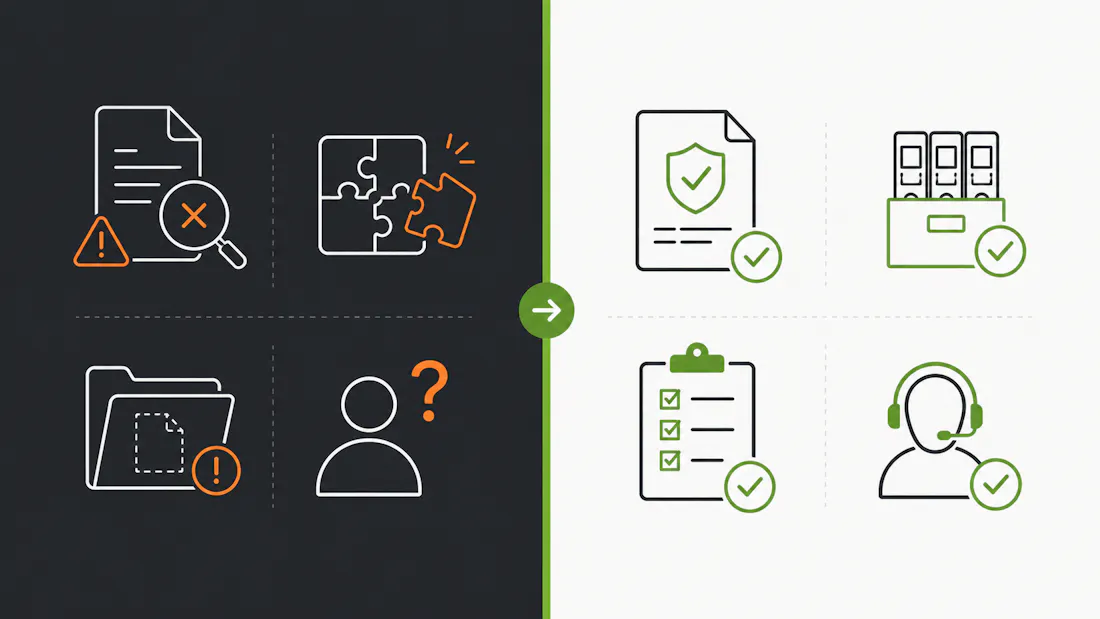
The Seven Places Assessments Go Wrong
Coalfire Federal's December 2025 analysis of C3PAO assessment findings across 2025 was direct: the most frequent pitfalls were incomplete or missing documentation. Not technology. Not controls. Documentation.
Here are the seven specific points where otherwise ready organizations lose ground.
1. SSP entries that describe intent, not implementation.
"Multi-factor authentication is used" is intent. "Microsoft Entra ID MFA is enforced via Conditional Access policy for all users accessing CUI-bearing systems, with hardware token exception managed through the Help Desk ticket process documented in CM-PR-003" is implementation. Assessors verify implementation, not intent. Generic SSP entries fail the Examine method.
2. Named control owners who don't own anything.
The SSP lists roles. The assessor interviews people. If the "IT Security Manager" listed as audit log review owner is the outside consultant who wrote the SSP rather than the internal person who actually runs the weekly review, the Interview method produces a finding. Roles in documentation must match roles in practice.
3. Evidence gaps in historical windows.
An assessor asking for audit log review records from 90 days ago needs to find them. A contractor who started systematic evidence collection six weeks before the assessment won't have them. The cadence has to predate the assessment by enough time to cover the historical sampling window.
4. Physical protection controls that weren't documented.
Visitor logs, escort procedures, physical access records for CUI areas — the Physical Protection control family is the one most IT-led programs under-document. For manufacturers with production floors, this family carries significant assessment weight.
5. Personnel who can't describe their roles.
The Interview method is where floor staff, IT administrators, and operations personnel get asked about the controls they own. If the documentation was written without their involvement, they can't describe their role in it. This isn't a knowledge problem. It's a documentation design problem.
6. Shared Responsibility Matrices that don't cover all providers.
Every external service provider handling CUI needs its own SRM in the SSP. Email providers, file sharing platforms, cloud infrastructure, managed security providers. An assessor who finds a provider handling CUI that isn't referenced in the SSP has a finding.
7. Configuration evidence that doesn't match the SSP.
The SSP says FIPS-validated cryptography is enforced. The configuration export shows a setting that permits non-FIPS algorithms in a specific context. That gap between the documented control and the actual configuration is a Test method finding.
What We Do to Prepare You
Step 1: Full Mock Assessment Using NIST SP 800-171A Methodology
We run a complete mock assessment before your C3PAO arrives. Every applicable assessment objective. Examine, Interview, and Test. We review your SSP entry by entry against your actual environment. We interview the personnel named as control owners. We test the controls the way a C3PAO assessor would test them. The mock surfaces findings that are correctable before the real assessment — not findings that become part of your formal results.
Step 2: SSP Accuracy Verification
We read your SSP against your live environment section by section. Every control entry gets verified against the actual tool, configuration, or procedure it describes. Where the SSP describes something that doesn't match what's deployed, we flag and fix it. The goal is an SSP where every entry reflects exactly what an assessor will find when they examine and test.
Step 3: Evidence Library Walk
We navigate the evidence library the way an assessor will. Starting from the Master Evidence Tracker, we verify that every artifact it references actually exists, is in the location it claims, is current, and is dated. We identify any assessment objectives with missing or stale artifacts and close those gaps before the assessment date.
Step 4: Personnel Readiness Sessions
We run targeted interview-prep sessions with every person named as a control owner in the SSP. Not a training course. A working session where each person walks through their documented role in their own words. We identify disconnects between what the documentation says and what the person actually does, and we resolve them — either by updating the documentation to reflect what the person actually does, or by clarifying the procedure so the person understands their real role.
Step 5: Physical Controls Verification
For manufacturers, we conduct a physical walkthrough verifying that visitor logs are complete, CUI area access records match the documented procedures, escort procedures are being followed, and physical media destruction records are current. Physical protection findings are among the most avoidable in CMMC assessments. They're also among the most common in manufacturing environments.
Step 6: Assessment Logistics and Scope Confirmation
We help you prepare the pre-assessment documentation package the C3PAO's Lead Assessor will review before the formal assessment begins: the SSP, network diagrams, asset inventory, assessment boundary definition, and the CUI scope documentation. We confirm with your C3PAO that scope expectations are aligned before their team arrives. Scope misalignment discovered on day one of an assessment is expensive.
The Scheduling Reality You Need to Understand
There are roughly 83 authorized C3PAOs as of early 2026, per Planet Security's March 2026 analysis. Approximately 80,000 defense contractors need Level 2 certification. At the current pace, full DIB certification isn't projected until 2029. The math creates a bottleneck that isn't going to ease.
C3PAO assessment slots are booking 6 to 9 months out right now. Some projections put wait times at 18 months or more by Q3 2026 as Phase 2 demand accelerates. Industry analysts project assessment fees will continue rising through late 2026 and into 2027 as demand outpaces supply.
The practical consequence for your organization: you can't wait until you feel ready to schedule your assessment. You schedule the assessment date, and then you build the preparation timeline backward from it. Every contractor waiting to "finish" preparation before scheduling is watching available slots disappear.
Book the slot. Then finish the preparation.
We help clients sequence preparation tasks against their scheduled assessment date so that the highest-risk readiness gaps are closed first, within the available window.
By the Numbers
C3PAO assessment fee range based on organizational size and scope (IBSSCORP, April 2026)
additional reassessment fees for a failed assessment, plus a 3 to 6 month delay before reschedule (CISPOINT, February 2026)
projected C3PAO scheduling wait time by Q3 2026 as Phase 2 demand accelerates (Planet Security, March 2026)
Who This Is Right For
This is the right engagement for:
This is the right engagement for:
- Defense contractors and manufacturers in California with completed gap assessments, SSPs, and evidence programs who have a C3PAO assessment scheduled or are actively selecting a C3PAO
- Organizations that received an adverse readiness determination from a C3PAO pre-assessment and need to understand and close the specific gaps before rescheduling
- Companies whose C3PAO assessment is within 90 to 180 days and need structured final preparation covering documentation accuracy, evidence currency, and personnel readiness
- Manufacturers with NADCAP or AS9100D accreditation whose physical protection controls and shop-floor CUI handling documentation need verification before assessment
Not the right fit:
The full CMMC program isn't in place yet. Gap assessment, SSP, and evidence program work come before C3PAO readiness preparation. Preparing for an assessment before the underlying program is built doesn't improve the outcome — it surfaces findings that should have been addressed earlier. We'll be direct with you about which phase applies.
A Critical Point About Consultant and Assessor Separation
The organization preparing you for CMMC assessment and the organization conducting your C3PAO assessment cannot be the same entity. This is a regulatory requirement under the CMMC framework, not a recommendation.
Consilien conducts readiness consulting, gap assessments, mock assessments, and SSP development. We do not conduct C3PAO assessments. That work goes to a Cyber AB-authorized C3PAO.
This matters for your program in two ways. First, you need both: a preparation consultant who understands your environment and has helped build your program, and an independent C3PAO who verifies the results. Second, you should be skeptical of any arrangement that blurs this line. A consultant who also conducts your formal assessment creates a conflict of interest the framework explicitly prohibits.
We help you select the right C3PAO for your engagement profile and coordinate the pre-assessment documentation package your C3PAO needs before the formal assessment begins.
What Consilien Brings to Pre-Assessment Work
Founded in 2001 and headquartered in Torrance, Consilien has worked with defense contractors, aerospace manufacturers, and mid-market organizations across Los Angeles, Orange County, the Inland Empire, and San Diego for over two decades.
Our C3PAO readiness work is led by a dedicated CMMC consultant who has built and verified CMMC programs from gap assessment through mock assessment. We know where assessors look first, which evidence gaps are most common, and which personnel readiness issues show up most reliably during Interview sessions.
Full disclosure: we can't certify you. Only a Cyber AB-authorized C3PAO can do that. What we can do is make sure the program you've built is ready to withstand the scrutiny. That's what the preparation engagement delivers.