Managed Security for Electronics Manufacturers: SIEM and SOC

Your production floor doesn't shut down at 5 PM. Neither do the threats targeting it. Managed SIEM and SOC gives you 24/7 visibility across IT and OT without building an internal security team.

Up 58% year-over-year
Ransomware attacks on manufacturing increased 58% year-over-year in 2025. Source: IBM X-Force, 2026.

Managed security for electronics manufacturers combines SIEM (security information and event management) and SOC (security operations center) monitoring to detect and respond to threats across corporate IT and production-adjacent systems, 24/7/365, without requiring your company to hire, train, and retain a dedicated security operations team.

For a mid-market electronics manufacturer with 1-2 IT people, building an internal SOC isn't realistic. Staffing a 24/7 operation requires a minimum of 5-6 analysts. The average SOC analyst in California earns $130K. The SIEM platform licensing alone runs $200K+ annually depending on log volume. That's before you account for tuning, maintenance, and the constant churn of keeping detection rules current.

Managed security gives you the coverage without the headcount.

What's Happening When Nobody's Watching

This is the question most electronics manufacturers haven't asked directly enough.

Your IT admin goes home at 6 PM. The production floor keeps running. Automated systems are processing orders. MES is logging quality data. The ERP is syncing with supplier portals. Engineering workstations are rendering designs. And the network connecting all of it is completely unmonitored.

If an attacker exploits a vulnerability at 2 AM on a Saturday, how long before anyone notices? Hours? Days?

IBM X-Force reported that ransomware attacks on manufacturing increased 58% year-over-year in 2025 ( IBM X-Force Threat Intelligence Index, 2026). The average time from initial access to ransomware deployment is dropping. Some groups execute in under 24 hours. If your detection capability has a gap between Friday evening and Monday morning, that is more than enough time for an attacker to move laterally, escalate privileges, exfiltrate data, and deploy encryption.

A managed SOC closes that gap. Real analysts. Real-time. Every hour of every day.

Line illustration of an empty night office with a wall clock beside a production conveyor still running behind glass

Why Standard IT Monitoring Isn't Enough for Electronics Manufacturing

Your RMM tool shows you whether endpoints are online and patched. That's useful. It's also not security monitoring.

Security monitoring in an electronics manufacturing environment needs to cover terrain that standard IT management tools weren't designed for.

Correlation across sources

A failed login attempt on its own isn't alarming. A failed login attempt followed by a successful login from an unusual IP, followed by a large file transfer from the design server, followed by a new process running on an engineering workstation? That's an attack pattern. SIEM platforms correlate events across multiple log sources to surface threats that no single tool would catch.

OT-adjacent visibility

Production equipment, MES platforms, and industrial control systems generate data that needs monitoring. Not the process data itself, but the security-relevant events. Firmware changes outside maintenance windows. Unexpected USB insertions on engineering workstations. Vendor VPN sessions running longer than baseline. If your monitoring doesn't see these, you have blind spots on the production floor.

Threat intelligence context

An alert without context is noise. Managed SOC analysts apply threat intelligence to determine whether an anomaly is a misconfiguration, a testing artifact, or an active threat. The difference between calling your IT admin at 3 AM for a false positive and catching a real intrusion before it reaches production systems is the quality of analysis behind the alert.

Compliance evidence

NIST SP 800-171 requires continuous monitoring (Control 3.12.3). CMMC Level 2 assessors want to see evidence that security events are being logged, analyzed, and responded to. SEMI E187 includes security monitoring as one of its 4 foundational requirements. A managed SIEM/SOC produces the logs, reports, and incident documentation that satisfy these requirements.

What Consilien's Managed Security Includes

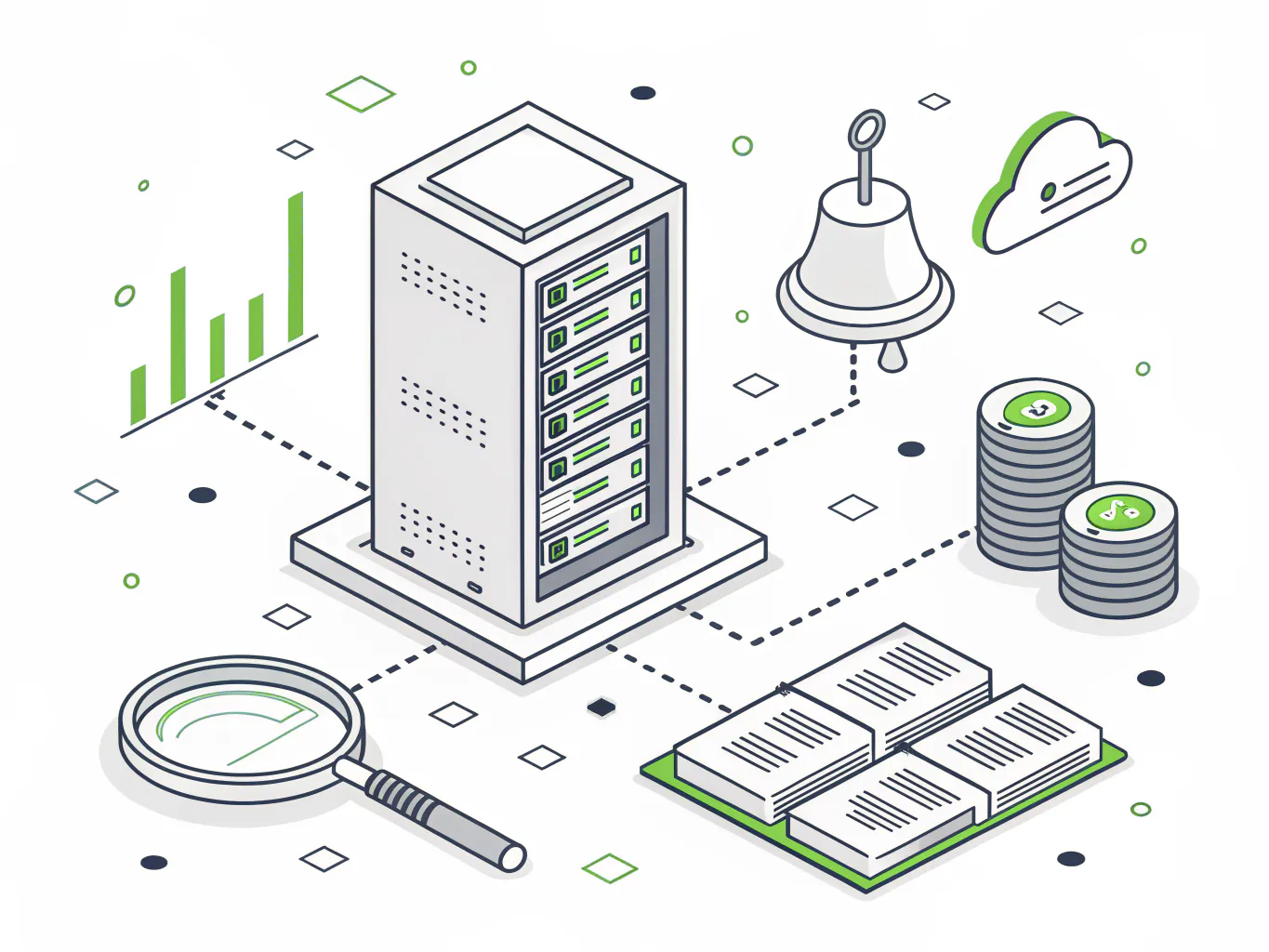
Line illustration of a server rack linked to a magnifying glass, an alert bell, and a stack of report documents

For semiconductor and electronics manufacturers, we extend monitoring to cover production-adjacent systems, vendor access patterns, and data flows between OT and IT segments. Not full OT monitoring (we're not replacing your SCADA vendor), but the security boundary where IT and OT meet is where most manufacturing attacks gain their foothold.

Managed Security vs. DIY: What You're Really Comparing

The calculation isn't "managed security cost vs. nothing." It's managed security cost vs. the cost of doing it yourself, done properly.

Building an internal SOC capable of 24/7 coverage requires a minimum of 5-6 analysts to cover shifts, plus a SIEM platform, plus a threat intelligence feed, plus ongoing training and certification. Conservative annual cost for a bare-minimum internal SOC starts around $1M in California when you account for salary, benefits, tooling, and turnover.

Managed security from a provider like Consilien costs a fraction of that. You get the same coverage, the same detection capability, and analyst expertise that's been honed across hundreds of manufacturing environments, not just yours.

There's a bias here, and I'll name it. We sell this service. But a 200-seat electronics manufacturer hiring 6 SOC analysts to monitor their environment 24/7 isn't a realistic alternative. And running without monitoring, given the threat landscape, isn't a defensible business decision.

How It Works With Your Existing IT Team

Your IT person isn't being replaced. They're being supported.

Day-to-day operations stay with your internal team. They handle user support, production floor issues, ERP questions, and the things that require institutional knowledge of your environment.

What comes off their plate is the security monitoring layer they never had bandwidth to build or maintain. The SOC watches. The SIEM correlates. When something needs attention, your IT team gets a clear alert with context, severity, and recommended action. Not a raw log dump. Not a 47-page report. Actionable information they can act on immediately.

If an incident escalates beyond what your internal team can handle, our security engineers step in alongside them. Containment. Investigation. Recovery. Post-incident reporting.

The co-managed model applied to security operations. Your control. Our expertise. Read more about how co-managed IT works for electronics manufacturers.

How a Managed Security Engagement Starts

Discovery. 20-30 minutes. We learn about your environment, your current security posture, and your compliance requirements.

Security assessment. We review your network architecture, existing security tools, log sources, and detection gaps. This tells us what to monitor, how to configure the SIEM, and where the highest-risk blind spots are.

SIEM deployment and tuning. We configure log collection across your environment, build correlation rules tuned to your specific risk profile, and validate that detection coverage matches your compliance requirements. This takes 2-4 weeks depending on complexity.

SOC goes live. 24/7 monitoring begins. The first 30 days include a tuning period where we calibrate alerting thresholds, reduce false positives, and establish baseline behavior for your environment.

Ongoing operations. Monthly reports. Quarterly reviews with your vCISO. Continuous rule tuning as your environment evolves. Compliance evidence delivered on schedule.

What Electronics Manufacturers Ask About Managed Security

How is this different from the monitoring our current MSP provides?


RMM monitoring tells you whether devices are online and patched. SIEM/SOC monitoring tells you whether someone is inside your network doing things they shouldn't be. Different tools, different purpose. If your current provider can't tell you who accessed your design file server at 2 AM last Tuesday and what they did there, that's not security monitoring.

You Can't Respond to Threats You Can't See

Every hour your environment runs without security monitoring is an hour where an attacker could be inside your network without anyone knowing. For electronics manufacturers carrying high-value IP, compliance obligations, and production systems that cost $500K per hour of downtime, that's a risk with a measurable price tag.

Explore our full approach to cybersecurity for electronics manufacturers or learn about compliance readiness as part of the security program.

Our Clients' Success

Consilien's IC24 Managed Cybersecurity includes 24/7 SIEM and SOC monitoring built for environments where uptime, IP protection, and compliance matter. We've been running security-first IT for manufacturers for 25+ years. MSP 501 for 2025 and 2026. Highly rated on Clutch.