Best MSPs for Accounting and CPA Firms: 8 Providers Ranked (2026)
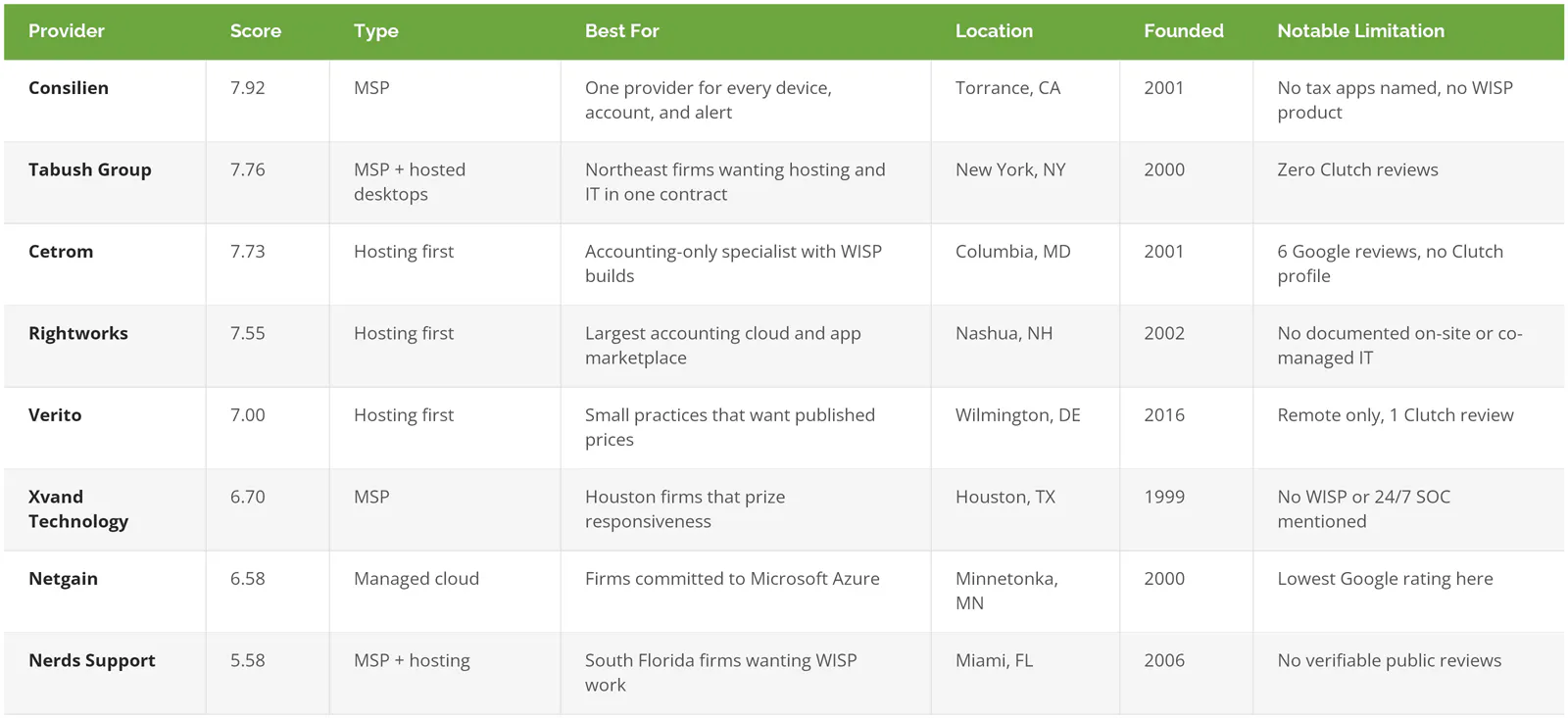
Consilien ranks first among the best MSPs for accounting firms in 2026 at 7.92 out of 10, on whole-firm coverage and a 24/7 security operations center. Tabush Group (7.76) pairs hosted desktops with co-managed IT, and Cetrom (7.73) is the accounting-only specialist. Seven criteria, live Clutch and Google data, both weightings published.
Table of Contents
Quick Picks
- Best Overall: Consilien
- Hosted desktops plus a co-managed option: Tabush Group
- Accounting-only specialist with the deepest security record: Cetrom
- Biggest accounting app ecosystem: Rightworks
- Only provider that prints its prices: Verito
- Strongest review record in Houston: Xvand Technology
Picking the best MSP for accounting firms looks like a tech decision until February. Then it turns into a staffing decision, a client-service decision, and sometimes a regulatory one. A tax workstation that won't open UltraTax on March 12 isn't an IT ticket. It's a partner, two seniors, and a stack of extensions sitting idle at billing rates that make the MSP's monthly fee look small.
Eight providers are scored below. Three of them started life as cloud hosts for tax and accounting software and added managed IT later. Five are managed service providers (MSPs, outside firms that run and secure a company's whole IT environment for a monthly fee) with a documented accounting practice. Both kinds sell themselves as IT companies for CPA firms, and both kinds show up on every list for this search. Almost none of those lists say which is which.
Consilien publishes this ranking and is one of the eight providers on it. The methodology section shows the weighting it was ranked under, the weighting it placed fifth under, and why the published one was chosen. If your firm is weighing IT for professional services firms more broadly, that page covers the wider picture.

A Tax App Host Isn't an IT Department
Two different products get sold to accounting firms under the same words.
An application host runs your tax and accounting software on its servers. Lacerte, UltraTax CS, CCH ProSystem fx, QuickBooks Desktop, Drake. Staff log in to a remote desktop and work from anywhere. The host patches the servers, backs them up, keeps the software licensed and current, and in the better shops pushes the January tax updates overnight so nobody loses a morning to an installer. Everything else in the building? Usually not its problem.
An MSP runs the building. Laptops, the firewall, Wi-Fi, Microsoft 365, the phones, the printer that jams every April, the new hire's account, the departing partner's account, the security monitoring. A good one also supports the tax apps, whether they sit on a local server, in a vendor's cloud, or with a host.
So who picks up when a senior's laptop gets ransomware on a Saturday in March? With a host alone, often nobody. The host's servers are clean. The laptop was never its job.
Plenty of firms buy both. Fine. Trouble starts when a firm buys a host, assumes it bought an IT department, and finds out during a cyber insurance renewal questionnaire that nobody has ever managed its endpoints (the laptops and desktops staff actually work on), let alone watched them for threats overnight. Every provider in this list is labeled by what it started as, and the scoring rewards the ones that cover the whole firm.
What the FTC Expects From a CPA Firm
Short version. If your firm prepares tax returns, federal law treats it as a financial institution.
Tax preparation firms appear by name in the FTC's guidance on the Safeguards Rule. Covered firms need a written information security program, which the IRS and the tax community call a WISP (written information security plan). They also need a designated Qualified Individual to run it, multi-factor authentication for anyone accessing customer information, encryption of that information, and ongoing testing. Since May 2024 there's a breach clock too. A security event involving the unencrypted information of at least 500 consumers has to be reported to the FTC as soon as possible, and no later than 30 days after discovery.
Small firms get less relief than they tend to assume. The exemption in 16 CFR 314.6 for firms holding information on fewer than 5,000 consumers removes four requirements. The written risk assessment, continuous monitoring or annual penetration testing, the written incident response plan, and the annual report to the board. The WISP itself stays. So do MFA, encryption, and the Qualified Individual. Not much of a break.
In July 2025 the IRS reinforced the point in IR-2025-79, and its free template, Publication 5708, walks a small practice through drafting one. A template is a start. But nobody can honestly fill in the encryption section of a WISP without knowing where the client data actually lives, which laptops sync it, which vendor portals hold copies, and who still has the password to the old file server.
And the cost of getting it wrong isn't abstract. IBM's 2026 Cost of a Data Breach study put the global average breach at $4.99M, up 12% in a year. A 15-person tax practice won't see that number. It will see a client list, a notification letter, and a very long conversation with its E&O carrier.
How These MSPs Were Scored
Seven independently researched criteria, applied the same way to all eight providers, produce each Confidence Score out of 10. Reviews, whole-firm coverage, and security operations carry 70% of the weight. No provider paid for placement or submitted its own data.
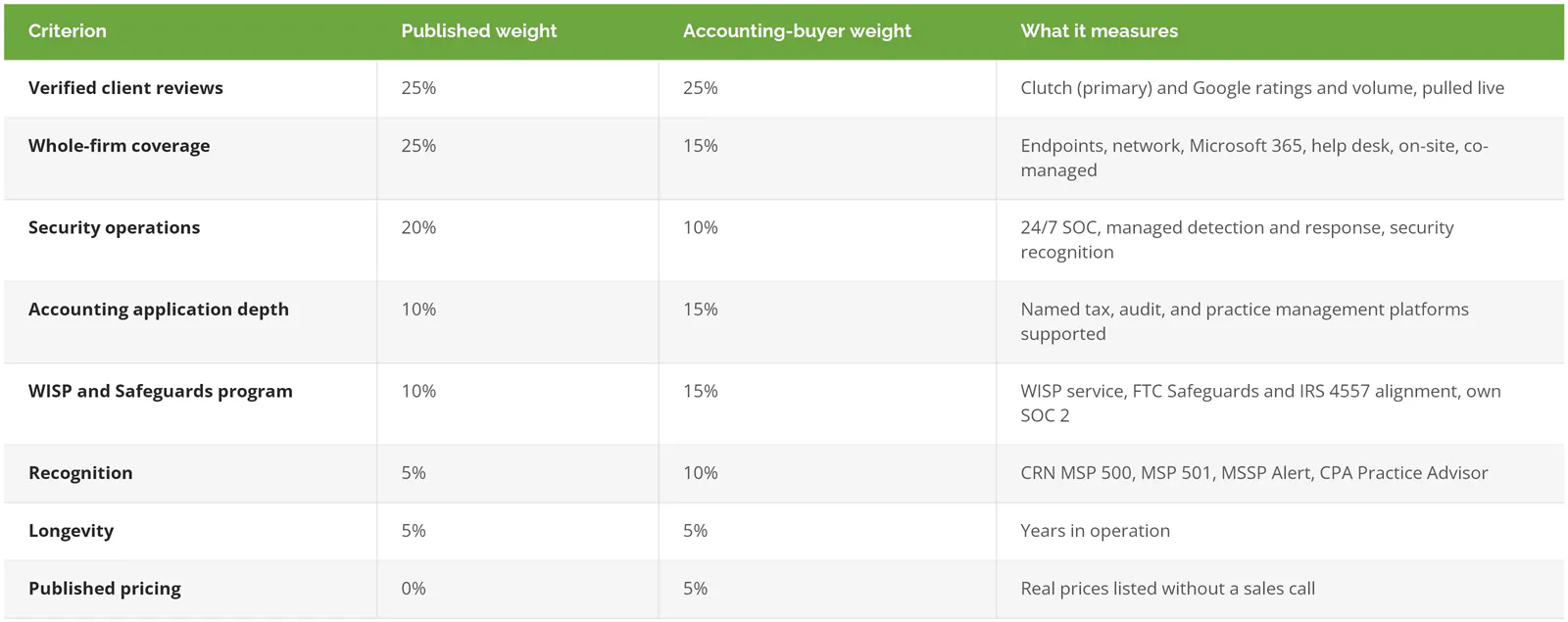
Verified client reviews (25%) come from Clutch and Google Business Profile, pulled live on September 24, 2026. Clutch interviews and verifies each reviewer, so it counts as the primary platform. Rating supplies 60% of each platform score and review volume supplies 40%, on a curve that flattens after about 60 reviews. A provider with no Clutch profile, or a profile with zero reviews, loses a quarter of this criterion outright. Cloudtango was dropped for every provider because its pages couldn't be read live.
Whole-firm coverage (25%) asks how much of a firm's IT the provider actually runs. Endpoints, network, Microsoft 365, help desk, on-site visits, and a co-managed option for firms that keep an internal IT person. A pure application host scores low here. That's deliberate.
Security operations (20%) looks for a 24/7 security operations center (SOC, the team that watches alerts around the clock and responds), managed detection and response, and independent security recognition.
Accounting application depth (10%) counts the tax, audit, and practice management platforms a provider names and supports, plus evidence of a tax-season process.
WISP and Safeguards program (10%) gives credit for a documented WISP service, named FTC Safeguards and IRS Publication 4557 alignment, and the provider's own SOC 2 report.
Recognition (5%) covers CRN's MSP 500, Channel Futures' MSP 501, MSSP Alert, and CPA Practice Advisor's Readers' Choice results. Longevity (5%) is years in operation.
Why those weights? The first version of this model, built around what an accounting buyer checks first, gave accounting application depth and the WISP program 15% each, reviews 25%, coverage 15%, security operations 10%, recognition 10%, longevity 5%, and published pricing 5%. Under it, Rightworks led at 7.72, Cetrom and Verito followed, and Consilien placed fifth at 6.96. The two accounting criteria are where Consilien is weakest. Its site names QuickBooks Desktop and hybrid accounting systems but no specific tax platform, and it doesn't sell a WISP.
So the published model moves that weight to coverage and security operations, for a reason that holds up against the rule itself. Read the list of Safeguards requirements again. MFA, encryption, access controls, monitoring, testing, incident response. Those are operations. A WISP describes them, and an auditor reads it, but the controls are what stop the breach. An accounting-only host can write an excellent WISP for the servers it runs while nobody watches the 30 laptops that connect to them. Weighting the paperwork above the people who run the controls rewards the wrong thing on a list of MSPs.
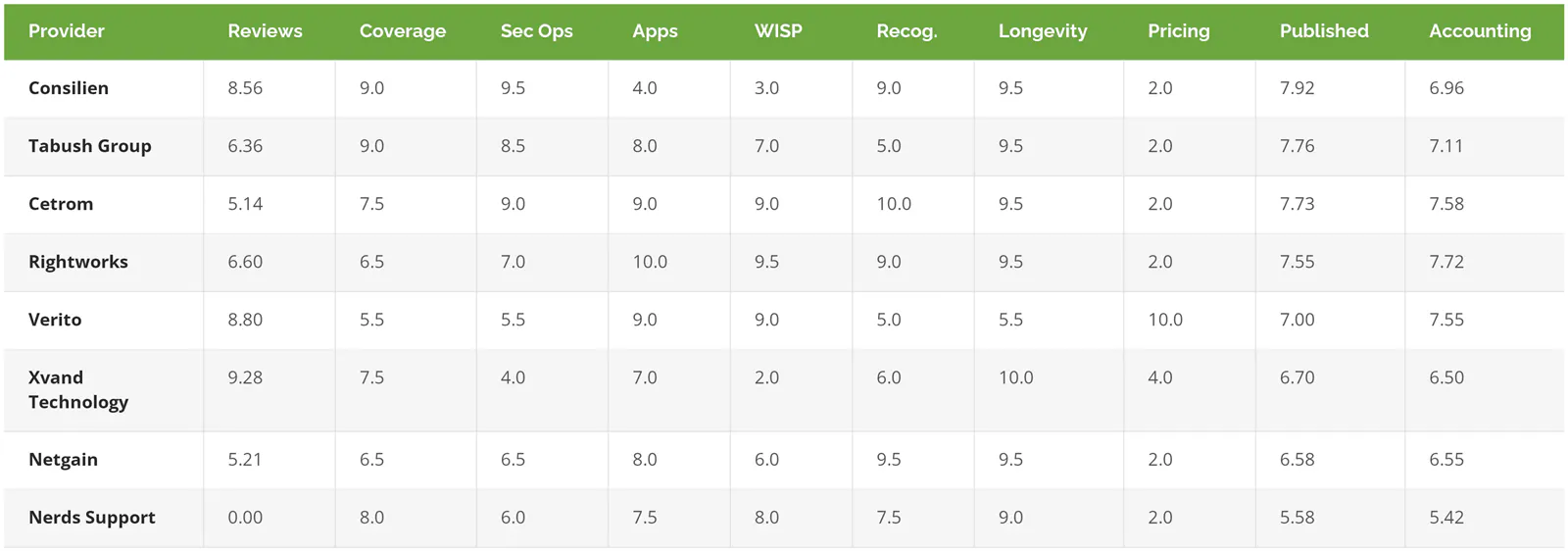
It's still a judgment call. And the margins are thin. Consilien leads Tabush Group by 0.16 and Cetrom by 0.19. Published pricing drops to zero weight in this model, which costs Verito the most. Both totals appear in the scorecard below, so anyone who prefers the first weighting can read the ranking that way.
Best MSPs for Accounting Firms at a Glance
1. Consilien: Whole-Firm IT With a 24/7 SOC Behind It
Consilien runs the entire environment for a firm, laptops to firewall to Microsoft 365, with its own round-the-clock security operations sitting behind the help desk.
Score: 7.92/10
Key Strengths
- A 24/7 SOC-as-a-service plus managed detection and response. That's the monitoring the Safeguards Rule asks for, run by people who can catch an intruder at 2 a.m. on a Sunday in March.
- Both models on offer. Fully managed IT, or co-managed IT for a firm that keeps an internal IT lead and wants 24/7 coverage and same-day on-site availability behind that person.
- 4.9 on Clutch across 6 verified reviews and 4.9 on Google across 13.
- Named to the Channel Futures MSP 501 in 2025 and again in 2026, at No. 306 this year.
- Supports QuickBooks Desktop and hybrid accounting environments with secure remote access for staff working away from the office. Plenty of CPA firms still run QuickBooks locally during audit season, and Consilien's approach is staged rather than a forced cloud move.
Where it falls short. The accounting-specific paper trail is thin. Consilien's site doesn't name Lacerte, UltraTax CS, CCH Axcess, or Drake, it doesn't offer a WISP as a product, and it has no published accounting case study. It scored 4 out of 10 on application depth and 3 on the WISP program, last and second to last. A firm that wants an MSP to hand it a finished, audit-ready WISP on day one should ask Consilien directly how that document gets built, or look at Cetrom or Verito. Compliance consulting (SOC 2, PCI, CMMC) is a separate engagement at Consilien, not part of the managed IT agreement.
Best For: Accounting and CPA firms that want one provider accountable for every device, account, and alert, including firms with an in-house IT person who needs backup.
Not Ideal For: A solo preparer who only needs Drake hosted in the cloud for four months a year.
Services: Managed IT, co-managed IT, help desk, 24/7 SOC, managed detection and response, managed firewall, backup and disaster recovery, vCIO and vCISO advisory, cloud migration. Compliance consulting sold separately.
Industries: Professional services (accounting, legal, consulting), manufacturing, distribution, real estate management, media and creative agencies.
Why It Ranks #1: Consilien is a managed IT and cybersecurity provider, founded in 2001 and headquartered in Torrance, California, that serves businesses nationwide. For accounting firms it solves the problem hosts leave open, which is everything outside the tax server. It wins on the two criteria that carry the most weight after reviews, coverage and security operations, and it loses on the two accounting criteria. The ranking depends on which of those you think matters more. For a firm whose biggest exposure is an unmonitored laptop rather than an unpatched tax server, Consilien is the stronger buy.
2. Tabush Group: The One With a Private Cloud Desktop Built In
Tabush sells its own hosted desktops inside the same contract as its managed IT, so a firm gets one vendor for both.
Score: 7.76/10
Key Strengths
- Boxtop, Tabush's private-cloud desktop service, comes preconfigured with the licensing, integrations, and security controls that tax and accounting software needs, and it sits inside a full managed IT agreement instead of beside one.
- The longest named app list in this ranking. Drake, Lacerte, UltraTax CS, ProSeries, CCH ProSystem fx, GoSystem Tax RS, QuickBooks Desktop and Online, Sage 50, Sage Intacct, TaxDome, Canopy, and Karbon.
- Guardian, a 24/7 SOC-as-a-service, plus Edge, a co-managed service for firms that keep internal IT.
- Names the FTC Safeguards Rule, IRS Publication 4557, and GLBA (the Gramm-Leach-Bliley Act, the federal privacy law the Safeguards Rule implements) on its accounting page.
Worth knowing before you call. Tabush's Clutch profile exists but holds zero reviews, and that cost it about two points on the reviews criterion. Google is solid, 4.7 across 28. The most recent CRN listing turned up in this research was the 2017 MSP 500. Offices sit in Manhattan and Quincy, Massachusetts, so on-site coverage outside the Northeast is worth asking about.
Best For: Northeast firms that want hosted desktops and full managed IT from one contract.
Not Ideal For: Firms that want to read verified client reviews before a first call.
Why It Ranks #2: On coverage the two tie at 9. Tabush wins both accounting criteria by 4 points each, and Consilien claws that back on reviews, security operations, and recent recognition, for a final gap of 0.16.
3. Cetrom: Twenty-Five Years of Nothing but Accounting Firms
Cetrom has served accounting firms exclusively since 2001, and it shows.
Score: 7.73/10
Key Strengths
- The best security record of any accounting specialist here. CRN's 2026 MSP 500 Security 100, the MSSP Alert Top 250 for 2025, and endpoint detection and response (EDR, software that watches each laptop for attacks) plus MDR extended from its cloud down to local devices.
- Guided FTC Safeguards support and IRS WISP builds, delivered from SOC 2 Type II data centers, so the plan and the infrastructure it describes come from the same provider and an auditor gets one set of evidence instead of two.
- Intuit Authorized host.
- Second in two CPA Practice Advisor 2026 Readers' Choice categories, hosted solution providers (15.5%) and outsourced technology services (19.4%), both behind Rightworks.
A small digression on review counts. Cetrom has one of the strongest reputations in the accounting technology press and one of the thinnest public review records on this list, with no Clutch profile and 6 Google reviews averaging 4.3. That's the single biggest reason Cetrom isn't first.
Best For: Firms that want an accounting-only provider to host the tax stack, write the WISP, and watch the endpoints.
Not Ideal For: Buyers who weigh public reviews heavily.
Why It Ranks #3: Under the accounting-buyer weighting Cetrom finishes second. Here it trails Consilien by 0.19. Cetrom wins every accounting criterion and loses the ranking on reviews and whole-firm coverage.
4. Rightworks: The Accounting Profession's Default Cloud
Rightworks is the default answer in accounting technology. The votes say so.
Score: 7.55/10
Key Strengths
- Won two 2026 Readers' Choice categories outright, hosted solution providers at 35.2% and outsourced technology services at 34.3%. No one else came within 14 points.
- QuickBooks Desktop hosting plus a marketplace of 3,000+ integrated apps.
- A dedicated WISP product and a Total Security bundle covering endpoint detection and response, a cloud-managed firewall, device backup, intrusion detection, a password manager, and phishing training.
- 426 Google reviews at 4.5, by far the largest review base here.
The tradeoff. Rightworks is a hosting platform that grew managed IT around itself. There's no Clutch profile, and the pages reviewed for this ranking don't document on-site support or a co-managed option, which holds coverage to 6.5. That's fine for a firm running nearly everything in Rightworks' cloud, where the platform already handles the servers, the apps, and much of the security stack the Safeguards Rule asks about. Less so if someone has to physically unplug a switch.
Best For: Firms that want the most widely used accounting cloud and are comfortable with a platform relationship.
Not Ideal For: Firms that need someone in the office when the network goes down.
Why It Ranks #4: Top of the list under the accounting weighting, fourth here. Nothing about Rightworks changed between the two models, only what the model was measuring.
5. Verito: The Only One Here That Shows You the Bill
Verito prints its prices. In this category, that's rare.
Score: 7.00/10
Key Strengths
- Hosting from $69 per user per month, managed IT from $79 per device, a bundle from $129 per user, and a standalone VeritShield WISP at $999 a year, all on annual agreements and listed on Verito's own pricing page. Hosting and the bundle add $100 a month per firm for the dedicated server, plus a $500 setup fee.
- Dedicated private servers per firm rather than shared hosts.
- 5.0 on Google across 48 reviews.
Weak spots? Founded in 2016, it's the youngest provider here by a decade, and its single Clutch review isn't much of a record. Its managed IT tier covers devices, ransomware rollback, email security, and identity management, but nothing on its pricing or company pages describes on-site visits, firewall or Wi-Fi management, or support for a server a firm keeps in its own office.
Best For: Small practices that want a fixed number before the first call.
Not Ideal For: Firms with office infrastructure that needs hands-on management.
Why It Ranks #5: Published pricing carries no weight in this model. It carried 5% in the accounting version, where Verito placed third.
6. Xvand Technology: Houston's Best-Reviewed Option
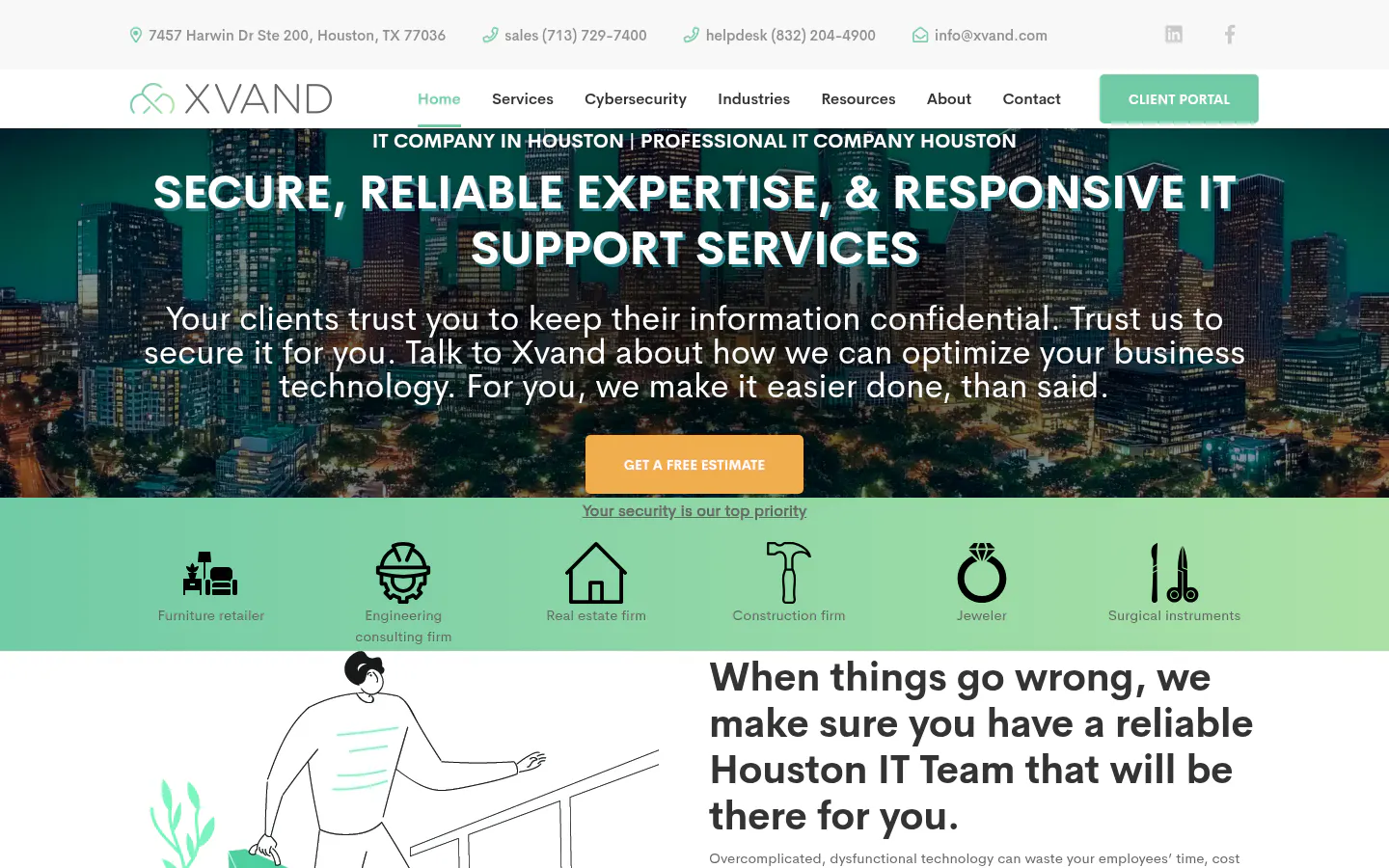
Five stars on Google across 68 reviews, plus 4.9 on Clutch. No provider here scores higher on reviews.
Score: 6.70/10
Key Strengths
- In business since 1999, the longest run of any provider on this list, with 12 verified Clutch reviews behind that 4.9.
- Names QuickBooks, Sage, CCH, Thomson Reuters, UltraTax, Lacerte, and ATX, and handles tax-season software updates on demand.
- A Summer 2026 Clutch Global award.
Xvand's own accounting page says it serves businesses in greater Houston, and nowhere on it does the company mention a WISP, the FTC Safeguards Rule, or a 24/7 SOC, which is why the provider with the best reviews on this list finishes sixth. Those gaps score 2 and 4.
Best For: Houston-area firms that value responsiveness over a formal security program.
Not Ideal For: Firms outside Texas.
Why It Ranks #6: A reviews leader that hasn't yet built the compliance and security layer this model rewards.
7. Netgain: Mid-Market Managed Cloud on Azure
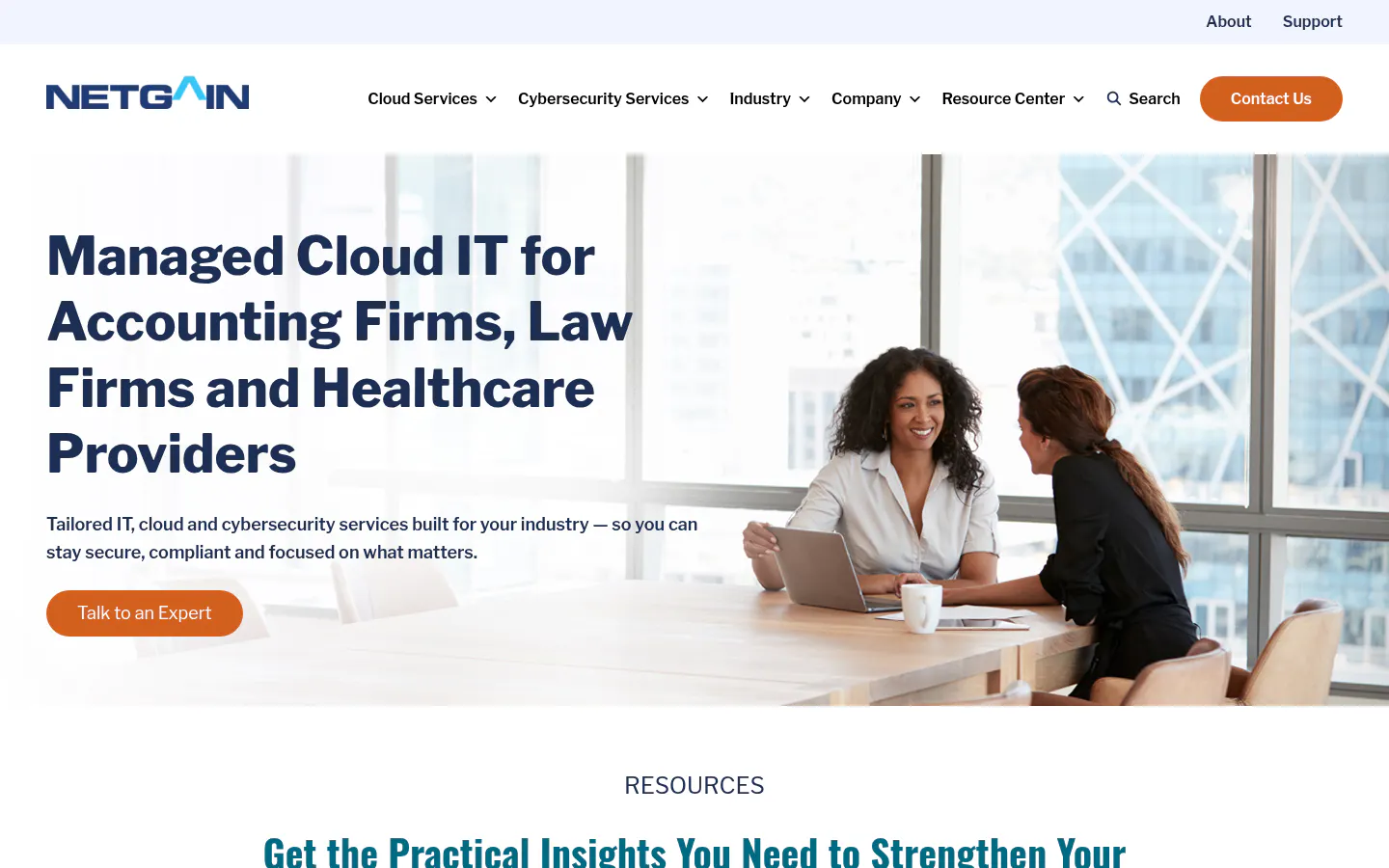
Netgain, based in Minnetonka, Minnesota, runs managed cloud for accounting, legal, and healthcare organizations. Not to be confused with NetGain Technologies in Kentucky.
Score: 6.58/10
Key Strengths
- CRN MSP 500 Pioneer 250 for a sixth consecutive year in 2026.
- CPA Cloud Essentials, an Azure-based managed service built for accounting firms.
- Names CCH Axcess, UltraTax CS, QuickBooks, and Thomson Reuters Practice CS.
Limitations. A 4.1 across 16 Google reviews is the lowest rating here, its Clutch profile holds no reviews at all, and the accounting page doesn't mention a WISP service, on-site support, or a co-managed option, which leaves a firm guessing about three things this ranking scores. Ask.
Best For: Larger firms already committed to Microsoft Azure.
Not Ideal For: Firms that want a hands-on local provider.
Why It Ranks #7: Strong recognition, middling everything else.
8. Nerds Support: A SOC 2 Audited MSP With a WISP Service
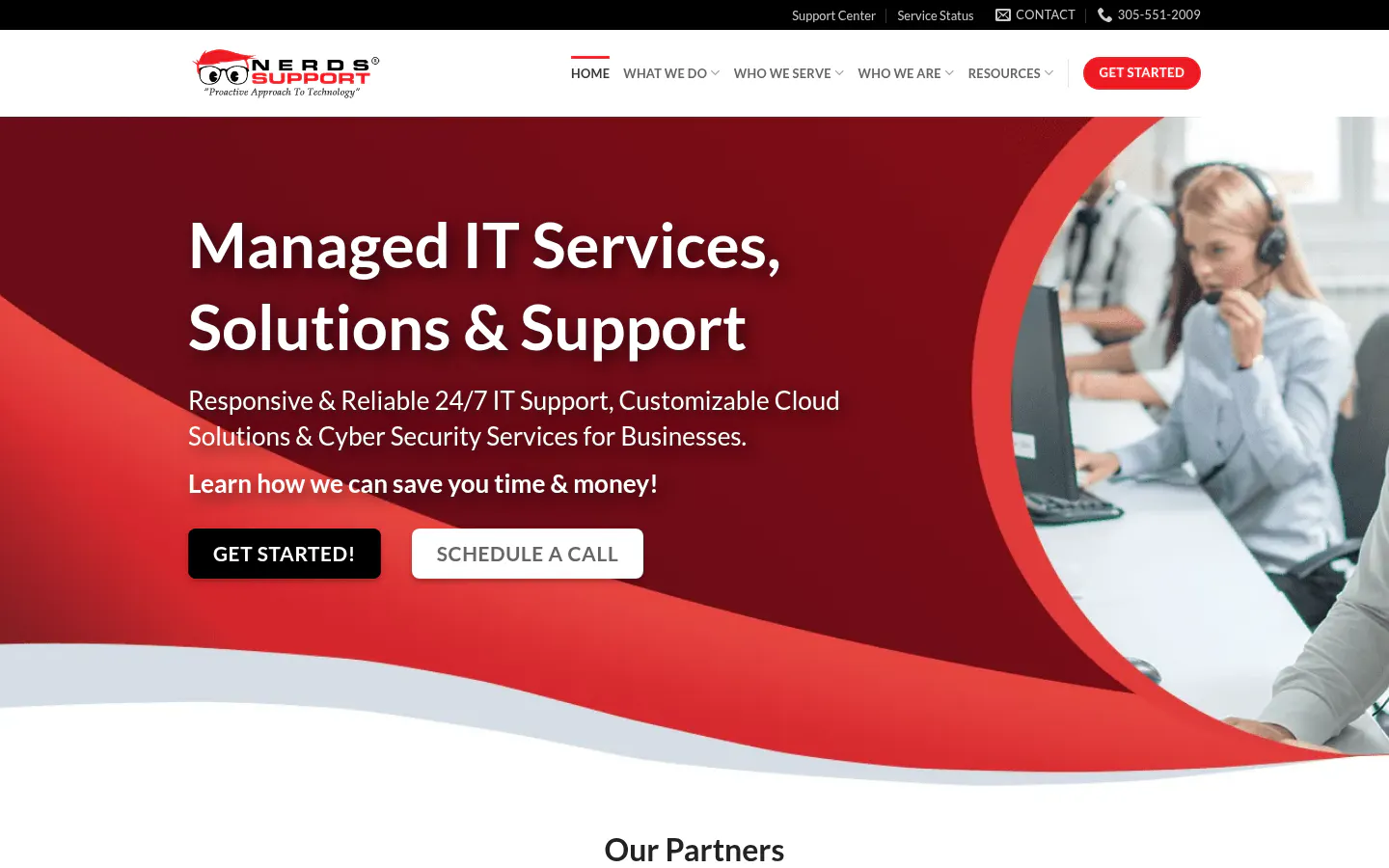
Strong paperwork. No public review record to match it.
Score: 5.58/10
Key Strengths
- Holds its own SOC 2 Type 2 report and offers WISP consulting and updates.
- Names QuickBooks, Lacerte, Thomson Reuters, Sage, Canopy, and CCH.
- CRN MSP 500 Pioneer 250 in 2024, its sixth time on the list.
No Clutch profile turned up, and three separate Google Maps queries returned no listing that matched the company's domain or address. [VERIFY: live rating unavailable for Nerds Support on Google and Clutch] That leaves its review criterion at zero under the same rule applied to everyone else, and that single empty cell is what pulls an MSP with its own SOC 2 report and a WISP practice to the bottom of the list.
Best For: South Florida firms that want WISP work bundled with managed IT.
Not Ideal For: Buyers who need verified reviews before a shortlist.
Why It Ranks #8: Better than its score, probably. But the score only counts what can be checked.
How to Choose an MSP for Your Accounting Firm
Before buying accounting firm IT support, decide whether you need a host, an MSP, or both. Then test any provider on three things. Who watches your laptops at night, who writes and maintains your WISP, and what happens to response times between February 1 and April 15.
If everything runs in the cloud and you're under 10 people, a host with a WISP add-on may be all you need. Verito prices it openly. Rightworks has the biggest app ecosystem.
If you have an office, a server, or a partner who refuses to give up QuickBooks Desktop, you need an MSP. Consilien and Tabush cover the whole firm. Cetrom covers most of it from an accounting-only base.
Keep an internal IT person? Ask for co-managed IT specifically. Consilien and Tabush both sell it.
If a client or your cyber insurer has asked for proof of your security program, ask every finalist for a sample WISP and a copy of its own SOC 2 report. Cetrom, Rightworks, Nerds Support, and Verito all sell WISP work outright. Consilien doesn't list one.
One question separates them fastest. "What did your busiest accounting client's worst week in March look like, and how many tickets did you close?" A provider that's lived through tax season answers with a number. One that hasn't answers with a process.
Before signing, read the contract for term length, exit terms, and who owns your data at the end. What belongs in an MSP contract covers the clauses worth fighting over. And if the provider you have now keeps missing the same issues every spring, the signs you've outgrown your IT provider are worth a read.
Where to Start
First place goes to Consilien because it runs and watches the whole firm, not just the tax server, and pairs that with a 24/7 SOC. Its weak spot is accounting-specific documentation, and the scorecard shows exactly what that costs it. Firms that want an accounting-only specialist should look hard at Cetrom. Firms in New York or New England that want hosted desktops, managed IT, and a 24/7 SOC under one contract should call Tabush before anyone else on the list. And a two-person practice that only needs its software in the cloud may never need an MSP at all.