Cybersecurity Services for Los Angeles Businesses: What to Look For in 2026
Cybersecurity services in Los Angeles will evolve from just being protective to full-service risk management in 2026. Businesses in 2026 should seek service providers who have comprehensive security measures such as constant threat monitoring, identity-focused security, immediate incident response, and compliance with NIST and CMMC. The best approach is co-managed cybersecurity where the internal IT team partners with a service provider focused on cybersecurity to reduce risk and be ready for operations.
Table of Contents
What Are Cybersecurity Services?
Cybersecurity services involve a variety of managed and consultative services provided to protect the company’s systems and business activities from cyber risks through the process of identification, prevention, detection, response, and recovery.
Cybersecurity Services Required by Businesses in 2026
To minimize actual business risk, as opposed to simply ticking the boxes, the services required should include:
- MDR
- IAM
- EDR
- Cloud Monitoring
- Vulnerability Management
- Incident Response and Recovery
- Risk Assessment
As identified by DBIR, credential abuse is a key factor behind data breaches, making identity security an absolute must-have.
Why Cybersecurity Must Be Unique for Los Angeles Organizations
Due to several challenges, the Los Angeles business environment is distinct from others: Firms with several SoCal locations work-from-home/hybrid models, highly regulated sectors (healthcare, financial defense), more risks through the supply chain, and vendors. Therefore, cybersecurity has to be deeply embedded in the business.
What to Look for in a Cybersecurity Provider in 2026
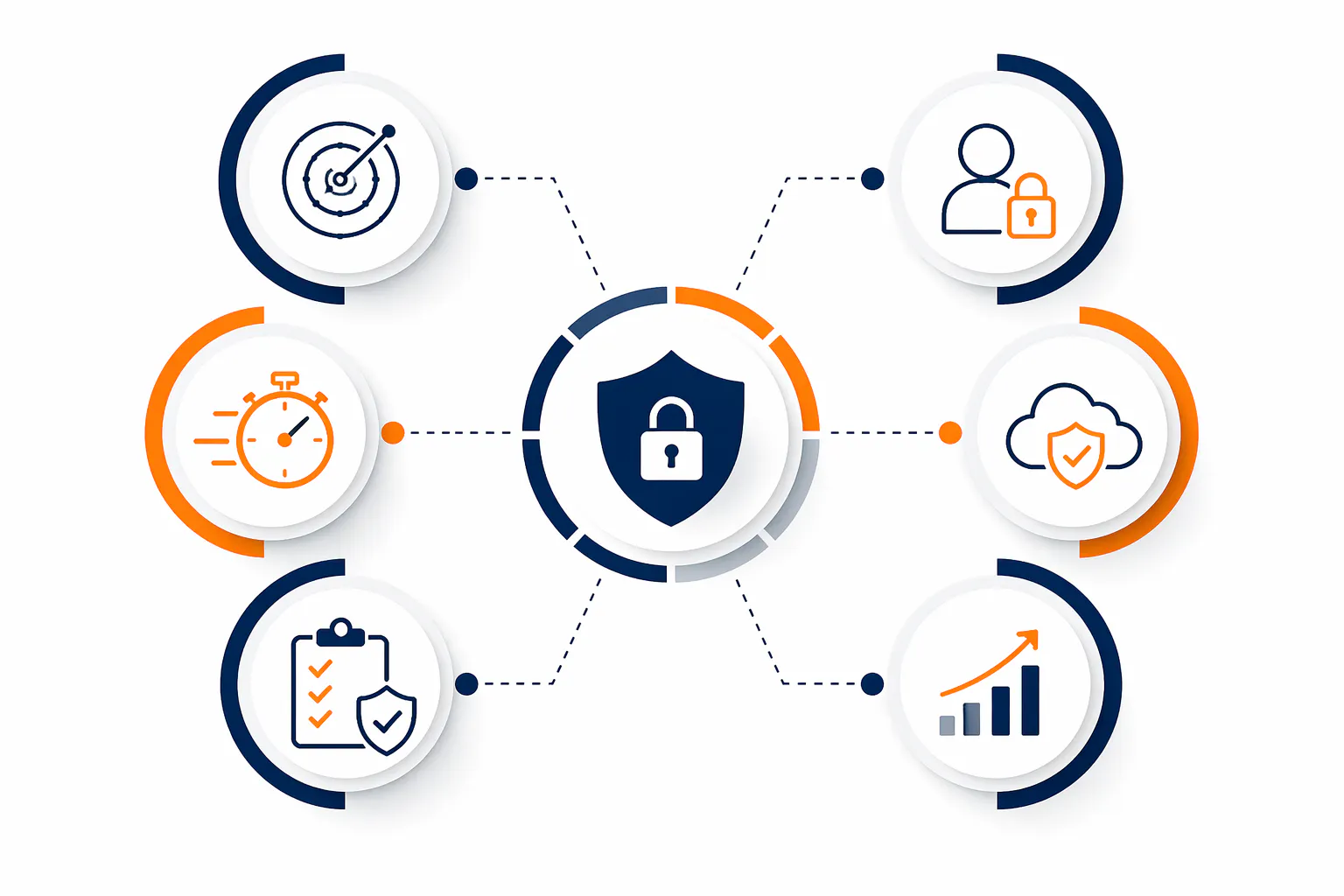
1. Detection Over Prevention
Prevention fails. Detection and response determine business impact.
- 24/7 monitoring capability
- Behavioral analytics (not just signature-based tools)
- Ability to detect identity-based attacks
2. Proven Incident Response Capability
Speed matters more than tools.
- Defined response playbooks
- Containment within minutes, not hours
- Business continuity focus
IBM Security reports that a delayed response significantly increases breach costs.
3. Identity-First Security Model
Perimeter security is no longer enough.
- Multi-factor authentication (MFA)
- Privileged access controls
- Zero Trust alignment (per Cybersecurity and Infrastructure Security Agency guidance)
4. Compliance Alignment
Your provider should map security to frameworks:
- NIST Cybersecurity Framework
- CMMC readiness
- SOC 2 support via the American Institute of Certified Public Accountants
- PCI DSS via Payment Card Industry Security Standards Council
5. Co-Managed IT Model
This is where most businesses are moving.
- Internal IT handles day-to-day operations
- External partner handles security monitoring and strategy
- Shared accountability model
6. Strategic Leadership (vCISO)
Tools don’t create security. Strategy does.
- Risk assessments tied to business impact
- Security roadmap aligned with growth
- Executive-level reporting
MSP vs MSSP vs Co-Managed Cybersecurity

Most Los Angeles businesses fall into the third category.
Why Co-Managed Cybersecurity Is the New Standard
Internal IT teams are stretched thin.
They’re responsible for:
- Infrastructure
- End users
- Applications
- Vendors
Adding full cybersecurity responsibility on top is unrealistic.
Co-managed models solve this by:
- Offloading monitoring and response
- Providing specialized expertise
- Allowing IT teams to focus on operations
Compliance Is No Longer Optional
Cybersecurity is now tied directly to compliance obligations.
Frameworks like NIST and CMMC are no longer limited to government contractors they’re influencing broader industries.
According to guidance from the National Institute of Standards and Technology, organizations must adopt a continuous risk management approach, not periodic audits.
How Much Do Cybersecurity Services Cost in Los Angeles?
There is no universal price.
Costs depend on:
- Company size and user count
- Number of locations
- Regulatory requirements
- Risk profile
- Existing infrastructure maturity
Most providers price based on risk exposure and service depth, not just device count.