IEC 62443 for Electronics Manufacturers: A Practical Guide
ISA/IEC 62443 is the international standard for securing industrial automation and control systems. For electronics manufacturers, it provides the framework for segmenting production networks into zones, controlling communication between them through conduits, and assigning security levels based on actual risk. This guide covers the parts of 62443 that matter for PCB fabricators, semiconductor suppliers, and EMS companies, how it connects to NIST CSF, SEMI E187, and CMMC, and what a practical implementation looks like without shutting down your production floor.
Table of Contents
Why Another Framework
Fair question. You're probably already dealing with NIST SP 800-171, maybe CMMC, possibly ISO 27001, and SEMI E187 if you're in the semiconductor supply chain. Adding another standard to the pile feels like overhead.
But IEC 62443 solves a problem the other frameworks don't address directly. NIST 800-171 covers IT systems handling CUI. CMMC assesses those controls. ISO 27001 covers information security management broadly. None of them were designed specifically for the operational technology environment on your electronics manufacturing floor.
IEC 62443 was.
It was built by the ISA99 committee specifically because OT environments were getting connected to IT networks without security frameworks that understood the constraints. You can't reboot a semiconductor process tool during a wafer run. You can't push a patch to a pick-and-place machine the way you push a Windows update. You can't run an active vulnerability scan against a legacy wire bonder without risking a crash that stops production.
IEC 62443 accounts for all of that. It provides a structured way to segment your factory network, assign security levels based on risk, and implement controls that work within the operational reality of manufacturing. Not IT security applied to a factory. Factory security designed for factory constraints.
The Parts That Matter for Electronics Manufacturers
The full IEC 62443 series contains over a dozen documents covering everything from terminology to product development lifecycle requirements. You don't need all of them.
For an electronics manufacturer operating a production environment (not building OT products for sale), three parts are operationally relevant, plus one for context.

62443-3-2: Risk Assessment and Zone/Conduit Design. This is where you start. It defines how to assess risk, divide your environment into zones, define communication paths (conduits) between them, and assign target security levels. Everything else depends on this step being done correctly. If your zone architecture is wrong, the controls you build on top of it won't protect the right things.
62443-3-3: System Security Requirements. This defines the technical controls required at each security level. There are 7 foundational requirements covering identification and authentication, use control, system integrity, data confidentiality, restricted data flow, timely response to events, and resource availability. Each foundational requirement contains system requirements (SRs) with requirement enhancements (REs) that scale with security level. At SL2, you're looking at roughly 100-150 implementable controls, depending on your environment.
62443-2-1: Asset Owner Security Program. This covers the organizational side. Policies, procedures, roles, responsibilities, and the security management system that governs how you maintain your OT security posture over time. This becomes relevant when you need to document your program for an audit or customer assessment.
62443-2-4: Service Provider Requirements. If you use system integrators, equipment vendors, or managed service providers who touch your OT environment, this part defines what you should require of them. For electronics manufacturers relying on external IT or OT partners, 62443-2-4 is how you set security expectations for third-party access.
The product development parts (62443-4-1 and 62443-4-2) matter if you're a vendor building equipment or components. If you're a manufacturer operating equipment, 3-2, 3-3, and 2-1 are your world.
Zones and Conduits in an Electronics Manufacturing Plant
This is the core concept. If you take one thing from this guide, take this.
A zone is a logical grouping of assets with similar security requirements. A conduit is a controlled communication path between zones. The idea is simple. Group assets by risk and function. Control what travels between groups. If one zone gets compromised, the damage stays contained.
Here's what that looks like in an electronics manufacturing facility.
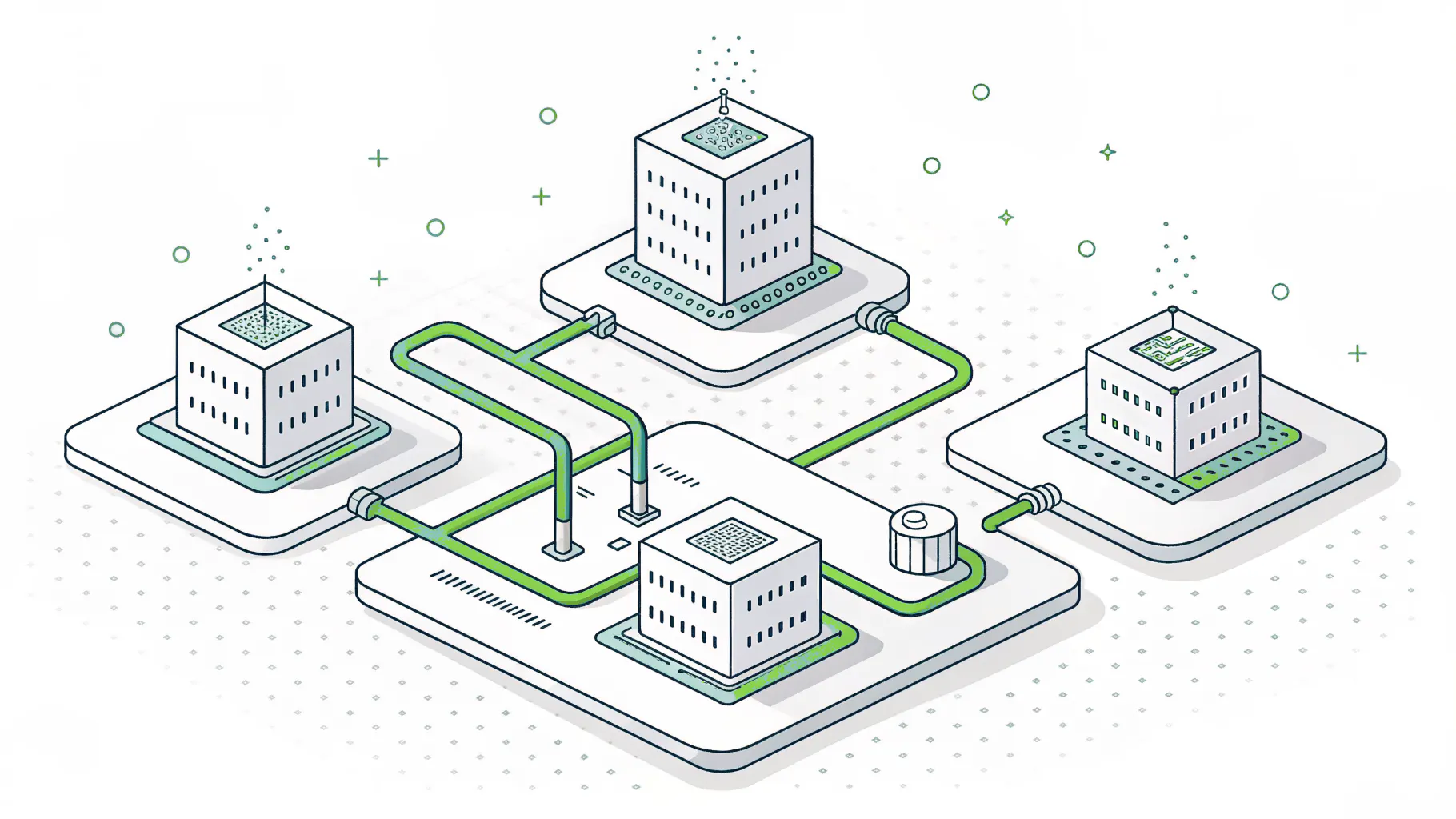
Enterprise IT Zone. Email, ERP, CRM, cloud applications, corporate Wi-Fi. Standard IT security controls. This is Purdue Level 4-5 territory.
Manufacturing Operations Zone. MES, production scheduling, quality management, data historians. These systems bridge IT and OT. They should sit in a DMZ between enterprise IT and the production floor, with controlled interfaces on both sides. Purdue Level 3.
Production Control Zone. SCADA, HMI stations, SPC systems, AOI software. These directly monitor and control production processes. Access to this zone should be restricted to authorized personnel with specific job functions. Purdue Level 2.
Equipment Control Zone. PLCs, robot controllers, motion controllers, equipment-level firmware. This is where the machines actually execute. These assets have the strictest availability requirements and the most limited security capabilities. Purdue Level 1.
Safety Zone. If your facility has safety-instrumented systems (SIS), they get their own zone with the highest isolation. A compromised safety system is a physical safety hazard, not just a production disruption.
The conduits between these zones define what traffic is allowed, how it's inspected, and what boundary devices (firewalls, data diodes, jump servers) control the flow. A conduit from the Enterprise IT zone to the Production Control zone should pass through the Manufacturing Operations DMZ. No direct connections. No exceptions.
For a semiconductor fab, Japan's Ministry of Economy, Trade and Industry published OT security guidelines in 2025 that specifically apply IEC 62443 zone-and-conduit architecture to semiconductor device factories, aligning with both SEMI E187 and NIST CSF 2.0. The model maps directly to the layered production environment of a fab, from tool-staging to metrology to process control.
Security Levels: What They Actually Mean
IEC 62443 defines 4 security levels that describe a zone's or conduit's capability to resist attacks from increasingly capable threat actors.

SL1: Protection against casual or coincidental violation. Someone accidentally accessing a system they shouldn't, or a worm spreading without targeting your environment specifically. Basic hygiene.
SL2: Protection against intentional violation using simple means with low resources, generic skills, and low motivation. This is where most electronics manufacturers should target for their production zones. SL2 covers the threats you'll actually face, opportunistic attackers, commodity ransomware, basic credential theft. It requires MFA, role-based access control, encrypted communications, audit logging, network segmentation, and incident response capabilities.
SL3: Protection against sophisticated attacks with moderate resources, IACS-specific skills, and moderate motivation. This is defense industrial base territory. If you're manufacturing defense electronics, handling CUI, or operating in a supply chain where nation-state threats are plausible, SL3 is the target for your most critical zones.
SL4: Protection against state-sponsored attacks with extensive resources, highly specialized skills, and high motivation. This is national critical infrastructure level. Very few commercial electronics manufacturers need SL4 across their environment.
The practical insight here is that not every zone needs the same security level. Your enterprise IT zone might target SL2. Your production control zone might target SL2 or SL3. Your safety zone targets SL3 or higher. The risk assessment in 62443-3-2 drives these assignments based on the actual consequences of a compromise in each zone.
How IEC 62443 Connects to Everything Else
For electronics manufacturers juggling multiple compliance requirements, 62443 isn't a separate effort. It's the OT layer that connects to your existing IT compliance programs.

NIST CSF 2.0: The NIST Cybersecurity Framework maps naturally to 62443. NIST published a Semiconductor Manufacturing Community Profile in early 2025 that explicitly aligns CSF 2.0 functions with semiconductor-specific risks and references 62443 zone architecture. If you're already working from NIST CSF, 62443 extends that work into OT.
SEMI E187/E188: These semiconductor industry standards cover cybersecurity for fab equipment (E187) and malware-free equipment integration (E188). They align with 62443 directly. Leading fabs like TSMC now require E187 compliance in supplier contracts. If you're an equipment supplier or a contract manufacturer serving semiconductor customers, 62443 zone architecture is the structural foundation that E187 controls sit on top of.
CMMC and NIST SP 800-171: Here's where it gets practical. OT zones that don't process, store, or transmit CUI can be scoped out of your CMMC assessment boundary. The 62443 zone architecture supports that scoping decision directly. You segment CUI-handling systems into defined zones with documented boundary controls. Everything outside those zones has a clear, defensible reason for being out of scope. That can significantly reduce the cost and complexity of your CMMC compliance effort.
EU Cyber Resilience Act (CRA): Applicable from December 2027, the CRA mandates cybersecurity requirements for products with digital elements sold in the EU market. For electronics manufacturers selling components or equipment into EU supply chains, IEC 62443-4-2 component requirements provide the primary alignment path. This isn't relevant yet for every reader, but it's approaching fast for anyone with EU customers.
What a Practical Implementation Looks Like
Here's the sequence that works for an electronics manufacturer starting from scratch with 62443. Based on published implementation timelines, a mid-sized manufacturing site should plan for 12-18 months to reach SL2 across primary production zones.

Months 1-3: Asset inventory and risk assessment (62443-3-2). Document every IT and OT asset. Map network connections. Identify data flows between systems. Define zones and conduits based on risk and function. Assign target security levels. This is the architectural foundation. Skip it, and everything you build later will be wrong.
Months 3-6: Quick wins and critical gap closure. Implement the controls with the highest risk reduction per dollar. Usually that's network segmentation (even basic VLAN separation is better than a flat network), default password elimination, and removal of unnecessary remote access paths. Disable services and protocols you're not using. Lock down vendor access to scheduled, logged, time-limited connections.
Months 6-10: Network segmentation and boundary controls. Build the zone architecture physically. Deploy firewalls between zones. Configure conduit rules. Stand up the industrial DMZ. This is the hardest phase because it requires coordination between IT, OT, production, and equipment vendors. Every rule change risks production impact if it's not tested.
Months 10-14: Monitoring, logging, and incident response. Deploy SIEM/SOC monitoring across IT and OT. Build correlation rules that connect IT events to OT events. Write incident response playbooks that account for production impact. Train the team.
Months 14-18: Documentation, governance, and audit readiness. Formalize the security program (62443-2-1). Document zone architecture, conduit policies, access controls, and monitoring capabilities. Prepare for customer assessments or third-party audits. Establish the ongoing governance cycle, quarterly reviews, annual risk reassessments, continuous monitoring.
Multi-site operations get 30-50% time reduction on subsequent sites by reusing the architecture templates and policies from the first implementation. The zone model translates well across facilities with similar production profiles.
Where Most Electronics Manufacturers Get Stuck
Three places. Consistently.
The zone architecture design. It sounds straightforward, segment by risk and function. In practice, the dependencies between systems are messier than anyone expects. The MES touches everything. The historian needs data from both IT and OT. Engineering workstations need access to both the corporate network and the production control zone. Getting the zone boundaries right without breaking production workflows requires deep understanding of how the systems actually communicate, not just how the network diagram says they should.
Vendor coordination. Your equipment vendors built their tools to be connected. Some require persistent internet connectivity for licensing. Some push firmware updates from cloud platforms. Some have remote support built in at the factory level. Getting those vendors to operate within your zone architecture, with controlled access, logging, and time-limited sessions, requires contractual and technical coordination that takes months.
Ownership. Who owns OT security? IT doesn't understand the production environment. Operations doesn't understand cybersecurity. The gap between the two is where 62443 implementations stall. A vCISO or security leader with both IT and OT experience can bridge that gap, but the role has to exist with clear authority and accountability.
We see all three of these in electronics manufacturing environments. We also see them get resolved when someone owns the problem end to end. Whether that's internal or external matters less than whether the ownership exists at all.
Where to Start
If you're an electronics manufacturer and you haven't started with IEC 62443, the entry point is always the same. Map your assets. Map your connections. Define your zones. That architectural step tells you where the risk actually lives and what controls will make the biggest difference.
Everything else, the security levels, the system requirements, the governance program, builds on that foundation.