OT vs IT Security in Electronics Manufacturing
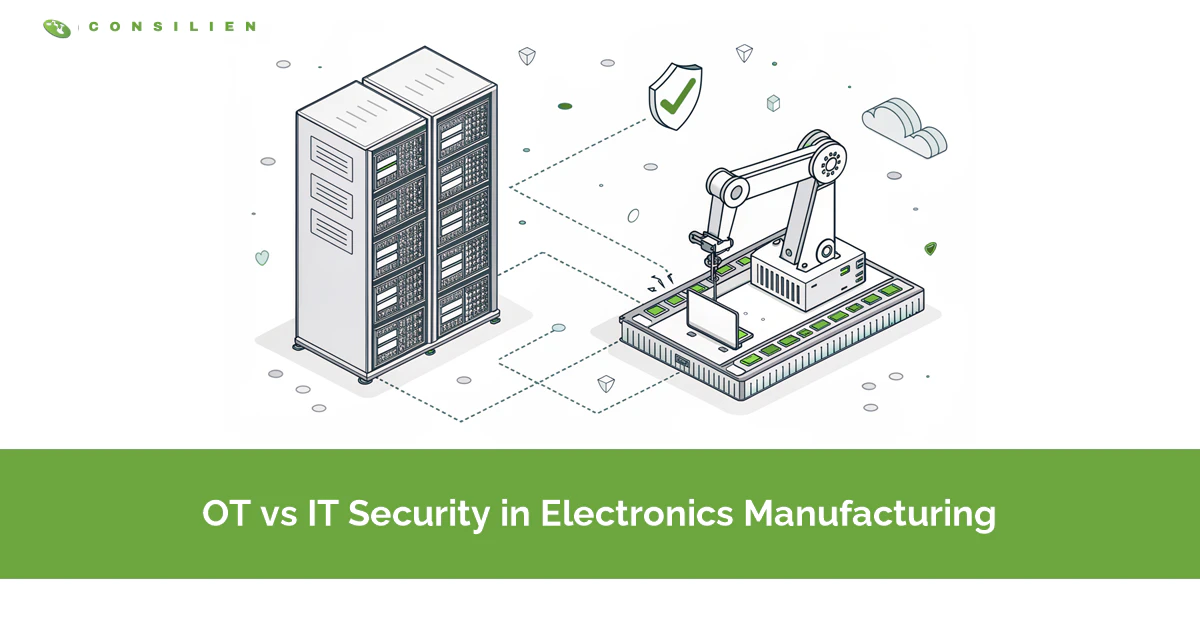
IT security protects business data, email, and corporate systems. OT security protects the machines, controllers, and production networks that actually build your products. In electronics manufacturing, the two environments are increasingly connected, and that connection creates attack paths that didn't exist 5 years ago. Understanding where IT security ends and OT security begins, and where the two overlap, is the difference between a manageable incident and a production shutdown.
Table of Contents
The Line That Used to Exist
There was a time when the production floor and the corporate network didn't touch each other. The pick-and-place machines, the reflow ovens, the test equipment, they ran on isolated networks with no path to the internet and no connection to the email server upstairs.
That's not how electronics manufacturing works anymore.
MES systems pull data from production equipment and push it to ERP. Remote monitoring lets engineers troubleshoot a wave solder machine from home. Cloud-based analytics dashboards display yield data in real time. Vendor support technicians connect to equipment controllers through VPNs. Every one of those connections punches a hole in the boundary between IT and OT.
And every hole is a potential path for an attacker.
IBM's 2026 X-Force Threat Intelligence Index reported manufacturing as the #1 cyberattack target globally for the 5th straight year, absorbing 27.7% of all attacks. The Check Point Manufacturing Threat Landscape 2026 report showed manufacturing-specific ransomware incidents jumped 56% year over year, from 937 in 2024 to 1,466 in 2025. The attack pattern is consistent. Compromise IT first, usually through phishing or credential theft, then move laterally into OT.
The SANS Institute's research on industrial control system intrusions found that roughly 80% began with a compromise on the IT side, with attackers moving laterally into OT environments through inadequate segmentation. That number hasn't improved.
IT Security and OT Security Are Solving Different Problems
This isn't a minor distinction. The priorities are inverted.
IT security follows the CIA model. Confidentiality first, integrity second, availability third. If your email server goes down for 2 hours while you patch a critical vulnerability, that's an acceptable tradeoff. Data protection is the priority.
OT security flips that order. Availability first, integrity second, confidentiality third. If your SMT line goes down for 2 hours, you've lost production output, potentially missed a shipping deadline, and maybe triggered a contractual penalty. A reflow oven controller that continues running safely after a security incident is far less catastrophic than one that stops mid-cycle because a vulnerability scan overwhelmed its network stack.
For electronics manufacturers specifically, the stakes compound because both priorities matter simultaneously. Your production equipment needs to keep running (OT priority). But the Gerber files, test data, and process recipes flowing through those systems need to stay confidential (IT priority). IBM X-Force reported 40% of 2026 manufacturing cyberattacks involved IP theft. Attackers aren't just shutting down lines. They're copying your designs on the way through.
Where IT Ends and OT Begins in an Electronics Manufacturing Facility
The Purdue Enterprise Reference Architecture provides the standard model for understanding the IT/OT boundary. Here's what it looks like in an electronics manufacturing plant.
Levels 4-5 (Enterprise IT): Email, ERP, accounting, CRM, cloud applications, corporate Wi-Fi. Standard IT infrastructure with standard IT security tools. Endpoint protection, patch management, identity management, email filtering. This is familiar territory.
Level 3 (Site Operations): MES, production scheduling, quality management systems, data historians. This is where it starts getting complicated. These systems often bridge IT and OT. They pull data from the production floor and push it to enterprise systems. They sit in a DMZ, or they should.
Level 2 (Supervisory Control): SCADA servers, HMI stations, AOI (automated optical inspection) software, SPC (statistical process control) systems. These directly monitor and control production processes. Some run on Windows, some on Linux, some on proprietary operating systems that haven't been updated in a decade.
Level 1 (Basic Control): PLCs, programmable automation controllers, robot controllers, motion controllers. These execute real-time control logic. They run proprietary firmware. Patching them requires vendor coordination and scheduled downtime.
Level 0 (Physical Process): Sensors, actuators, motors, conveyor systems, temperature controllers, pneumatic valves. The actual physical equipment.
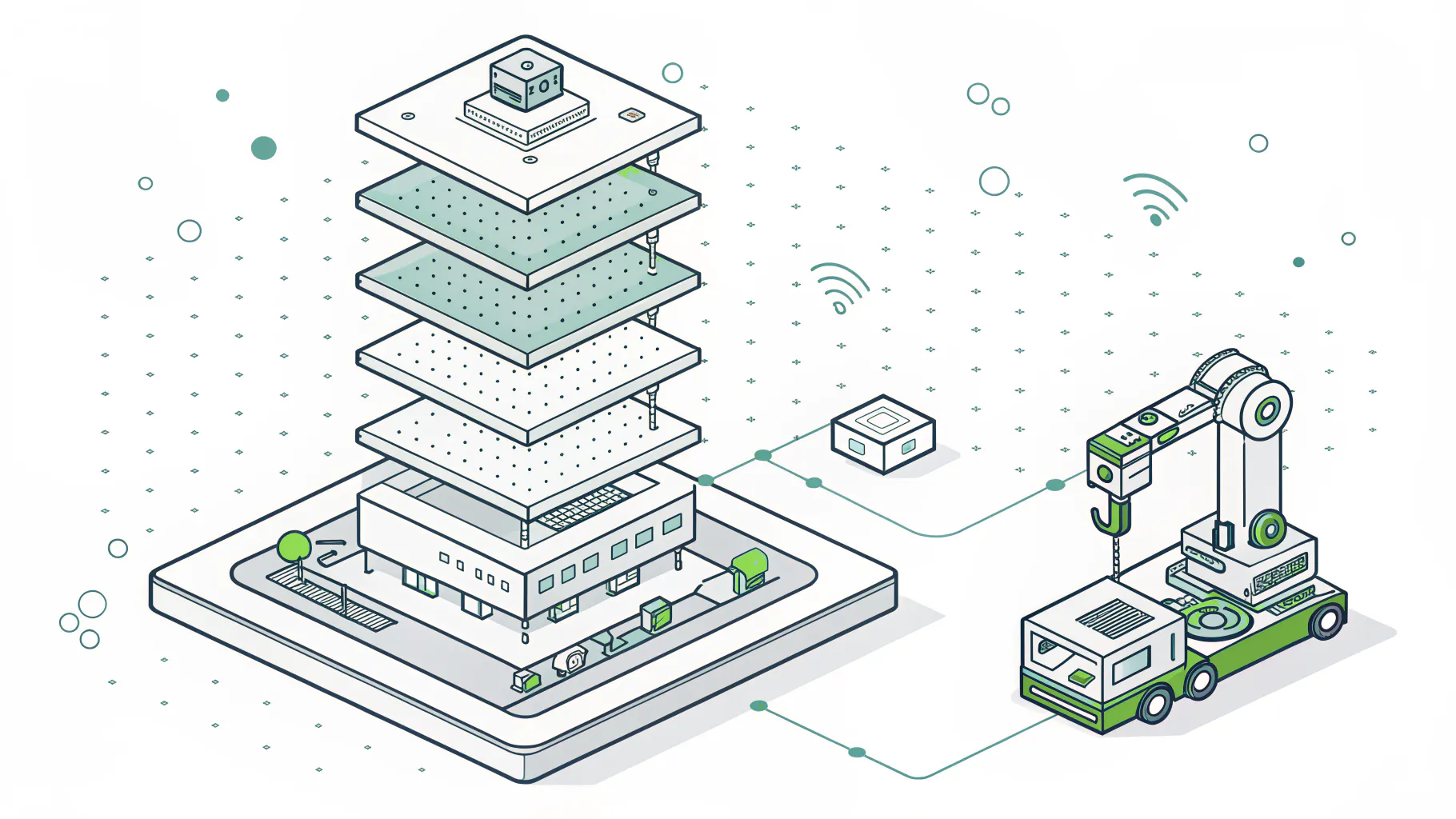
The problem? Modern electronics manufacturing breaks the Purdue model's core assumption. The model assumes each level communicates only with adjacent levels through controlled interfaces. But cloud connectivity, remote vendor access, IoT sensors feeding analytics platforms, and MES integrations create direct paths across multiple levels simultaneously.
A company I know discovered their pick-and-place machine vendor had a persistent VPN connection from their Level 1 equipment directly to the vendor's cloud diagnostic platform, bypassing Levels 2, 3, and the DMZ entirely. Nobody in IT knew about it. Nobody in operations questioned it. The vendor set it up during installation 3 years earlier. That's a direct, unmonitored path from the internet to the production floor.
The Five Places Where IT/OT Security Falls Apart in Electronics Manufacturing
Not ten. Not a dozen. Five. These are the patterns I see repeatedly.
1. Flat networks with no segmentation between corporate IT and production OT.
The most common and most dangerous gap. When an attacker compromises a corporate email account and can reach a PLC from that same network, the game is already over. Network segmentation following the ISA/IEC 62443 zones-and-conduits model is the single highest-priority control for any electronics manufacturer, and it's missing more often than you'd expect from companies running $50M+ in annual revenue.
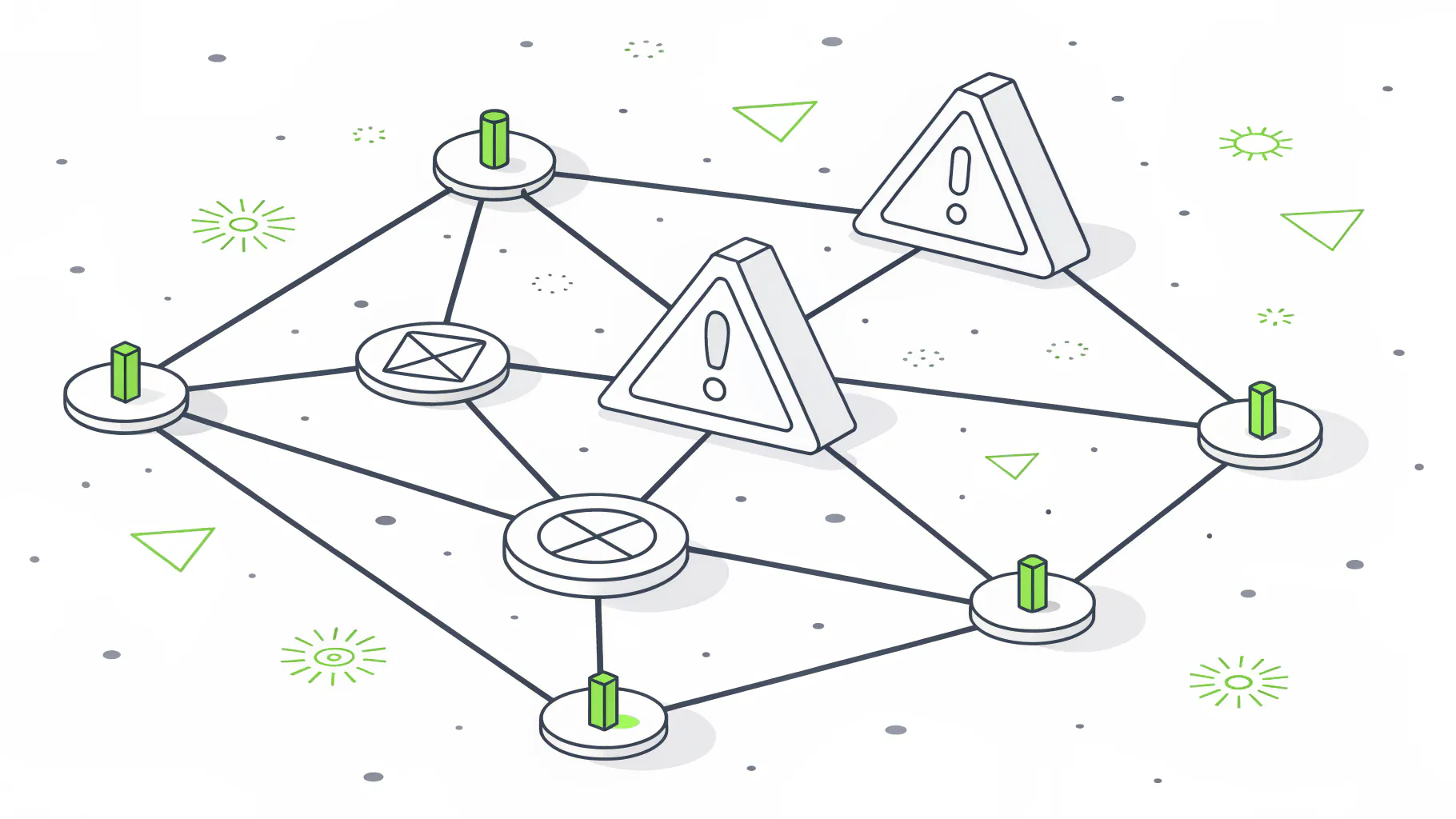
2. Vendor remote access with no controls.
Equipment vendors need access to machines for maintenance and troubleshooting. That access is usually provided through a shared VPN account, a TeamViewer session, or an always-on RDP connection. In electronics manufacturing, you might have 10-15 different equipment vendors with remote access to various systems on the production floor. Each one is a potential entry point. Over 40% of manufacturers had breaches tied to third-party access in 2025.
3. Shared credentials on production floor workstations.
We covered this in depth on the IAM page, but it's worth repeating here. Shared logins on MES terminals, engineering workstations, and test equipment mean no individual attribution. When something goes wrong, you can't tell who did what. And for ITAR or CUI environments, shared accounts fail compliance requirements on contact.
4. Legacy equipment that can't be patched or scanned.
A 15-year-old wire bonding machine running Windows XP embedded with a proprietary control application. You can't install endpoint protection on it. You can't patch it. You can't scan it without risking a crash. But it's on the network, and it's producing revenue. The only option is compensating controls, meaning network isolation, restricted access, and monitoring. Not fixing the device, but containing the risk around it.
5. No OT-specific incident response plan.
IT incident response says contain the threat, isolate affected systems, preserve evidence. OT incident response has to answer a different question first. Is it safe to shut this down? If a ransomware attack hits your historian server and your MES, do you stop the entire SMT line or keep running without data collection? The answer depends on what's being manufactured, what's at risk, and whether safety systems are affected. Without a manufacturing-specific incident response plan, those decisions get made under pressure by whoever happens to be in the room.
What Good IT/OT Security Looks Like for an Electronics Manufacturer
There's no single product that fixes this. It's an architecture problem, a process problem, and an ownership problem. Here's what the solution actually involves.
Network segmentation with an industrial DMZ. IT and OT on separate network segments with controlled interfaces between them. An industrial DMZ handles systems that legitimately need to communicate with both sides, your MES, your historians, your remote access jump servers. All traffic between IT and OT passes through the DMZ and gets inspected. No direct connections from Level 4/5 to Level 1/0.
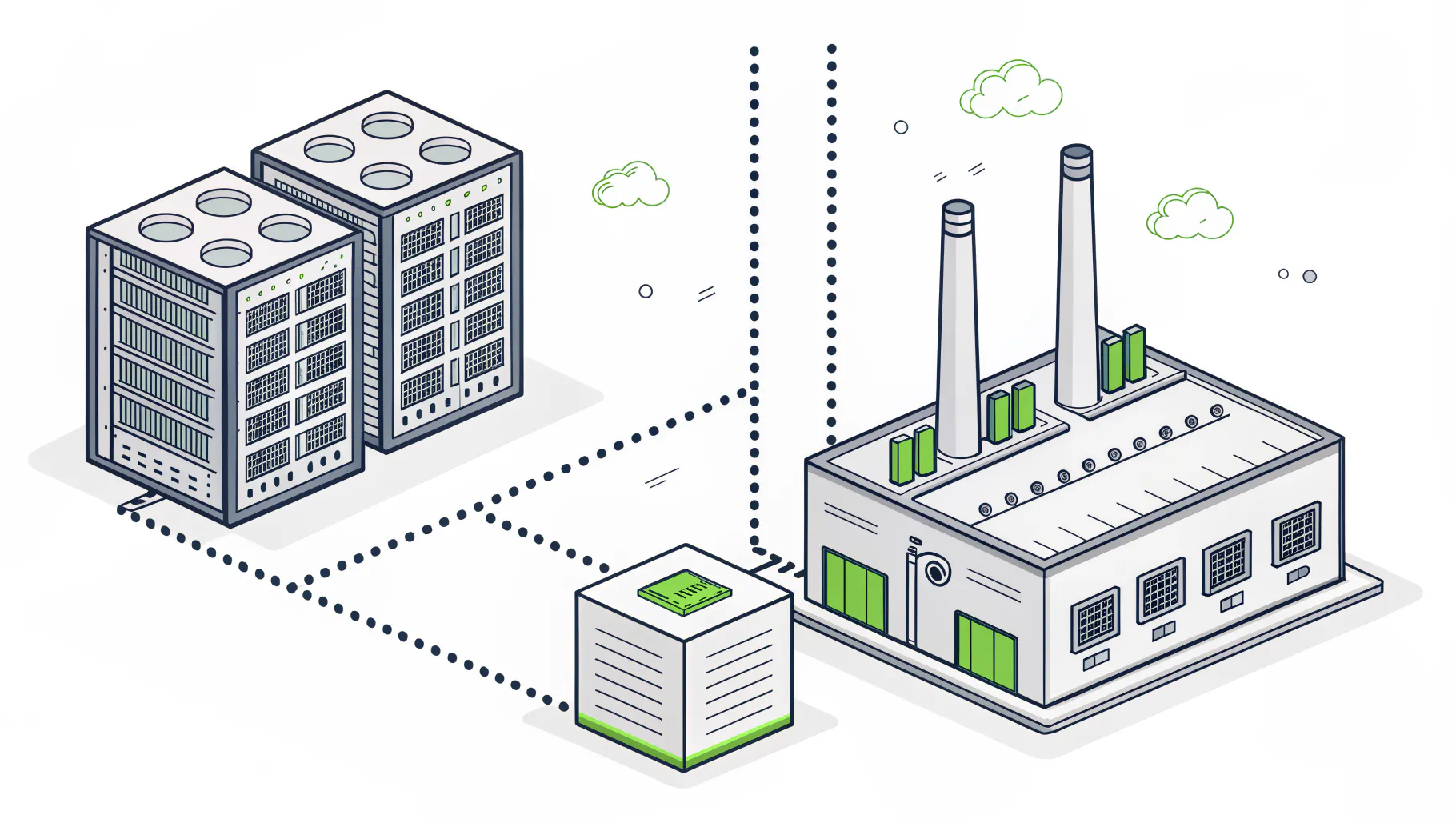
Managed security monitoring across both environments. SIEM covering IT events. OT-aware monitoring covering production network traffic. Correlation between the two. If someone's corporate credentials are compromised at 2 AM and there's unusual traffic to the production VLAN at 2:15 AM, those events need to be connected and investigated together. Not by two separate teams looking at two separate dashboards who don't talk to each other.
Vulnerability management that respects OT constraints. Continuous scanning on IT assets. Passive monitoring and vendor-coordinated assessments on OT assets. Risk-based prioritization that factors in production impact, not just CVSS scores. We wrote a full breakdown on the vulnerability management page.
Identity controls that work on a manufacturing floor. Individual attribution on every workstation, including shared terminals. MFA methods that work with gloves and clean room restrictions. Automated deprovisioning for contractors and vendors. Access reviews that actually happen quarterly, not annually or never.
A unified governance structure. Someone has to own the boundary. In too many electronics manufacturers, IT security owns the corporate network and nobody owns the production network. Or operations owns the production network but has no security expertise. A vCISO or internal security leader who spans both environments, with authority and accountability across the full attack surface, is the structural fix.
The Compliance Layer
Every major compliance framework applicable to electronics manufacturing addresses both IT and OT security, even if the language doesn't always make the distinction explicit.
NIST SP 800-171 covers the IT systems handling CUI, but its requirements around access control, audit logging, and system integrity apply to any system processing or storing controlled data, including production systems connected to CUI-handling networks. NIST SP 800-82 specifically addresses industrial control system security.
ISA/IEC 62443 is the primary international standard for industrial cybersecurity. It defines the zones-and-conduits model, security levels for different system categories, and requirements for both asset owners and equipment suppliers. For electronics manufacturers selling equipment into regulated supply chains, IEC 62443 compliance may be a contractual requirement.
SEMI E187 addresses cybersecurity for semiconductor manufacturing equipment specifically, covering both IT and OT aspects of fab tool security.
If your organization handles ITAR data, the access control requirements don't stop at the IT boundary. ITAR-controlled technical data on an engineering workstation connected to the production network is still ITAR-controlled.
Where to Start If You're Behind
If IT and OT security are currently separate conversations, or worse, if OT security isn't a conversation at all, start here.
Run an asset inventory across the production network. Document everything that has a network connection, including equipment you forgot was connected. Identify every vendor remote access path. Map the network connections between corporate IT and production OT. Every link, every VLAN bridge, every "temporary" connection that became permanent.
That map tells you where the risk actually lives.
Schedule a technology assessment and we'll map the IT/OT boundary for your electronics manufacturing environment, identify the highest-risk gaps, and build a prioritized remediation plan.