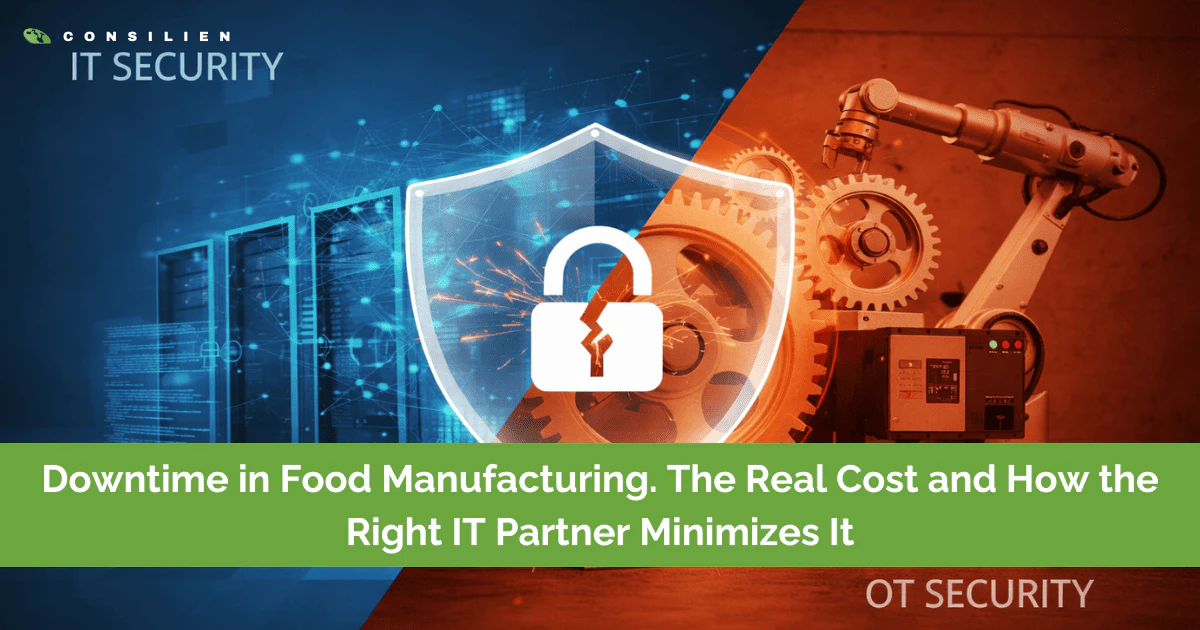
That tension is the heart of OT vs IT security in manufacturing.
And it’s where most organizations get it wrong.
OT security and IT security are fundamentally different disciplines: IT protects data confidentiality, while OT protects production uptime, equipment safety, and process continuity. Applying IT security controls directly to OT environments is the most common — and costly — mistake manufacturers make.
In manufacturing, an OT security failure doesn't mean lost files. It means halted production, scrapped materials, missed shipments, and potential safety incidents. The sections below break down where the two disciplines diverge, where most organizations get it wrong, and what a practical OT security roadmap looks like for a manufacturing operation.
Why OT and IT Security Are Not the Same, Especially in Manufacturing
IT security protects information.
OT security protects operations, safety, and uptime.
That difference sounds subtle. It isn’t.
In manufacturing, a security misstep doesn’t just mean lost data. It can mean:
- Production shutdowns
- Scrapped materials
- Missed shipments
- Safety incidents
- Regulatory and insurance exposure
Yet many manufacturers still apply IT security rules directly to OT environments.
That’s how outages happen.
OT vs IT Security: The Differences That Actually Matter on the Shop Floor
Primary objective
- IT security: Confidentiality and data integrity
- OT security: Availability, safety, and process continuity
In OT, availability wins. Even a short outage can cost tens of thousands of dollars per hour.
System lifespan
- IT systems refresh every three to five years
- OT systems often run fifteen to thirty years
Many OT assets were never designed with cybersecurity in mind.
Patching and change tolerance
- IT patches aggressively
- OT patches cautiously, if at all
Unplanned changes in OT can halt production or damage equipment.
Network design
- IT networks are segmented and monitored
- OT networks are often flat, fragile, and vendor-dependent
That flatness is exactly what attackers exploit.
What OT Security Looks Like in a Real Manufacturing Environment
In the real world, OT environments include:
- PLCs controlling critical processes
- HMIs used by operators every shift
- SCADA systems aggregating production data
- Vendor remote access that was set up years ago and never revisited
Many of these systems:
- Cannot be easily patched
- Cannot run endpoint protection
- Cannot tolerate latency or deep packet inspection
That’s why OT security must be designed differently, not ignored.
Common OT Security Mistakes Manufacturers Keep Making
These issues show up repeatedly in incident reviews.
- Treating OT like office IT
- Applying patches without production testing
- Not knowing what OT assets actually exist
- Leaving vendor access permanently enabled
- No clear ownership between IT and operations
The most damaging mistake is assuming OT security belongs to someone else.
How IT and OT Security Should Work Together Without Breaking Production
Strong OT security doesn’t fight IT. It aligns with it.
Clear ownership
- IT owns corporate security standards
- Operations owns uptime and safety
- OT security lives between them
Gaps cause breaches. Overreach causes outages.
Smart segmentation
- Separate business systems from control systems
- Control traffic between zones instead of blocking blindly
- Reduce blast radius without disrupting workflows
Monitor before you block
In OT, visibility comes first.
- Establish a baseline
- Detect abnormal behavior
- Alert before interrupting processes
OT-aware incident response
Every plan must answer one question clearly.
Who has the authority to shut down production?
If that answer is vague, the plan will fail.
According to the Cybersecurity and Infrastructure Security Agency (CISA), manufacturing is consistently one of the top targeted sectors for ransomware attacks on critical infrastructure.