What Happens When Ransomware Hits an Electronics Manufacturer
When ransomware hits an electronics manufacturer, production stops, shipping stops, communication breaks, and the recovery takes weeks, not days. This article walks through what actually happens, using real incidents from Data I/O, Sensata Technologies, Benchmark Electronics, and others, and explains what determines whether a company recovers in days or months.
Table of Contents
On August 16, 2025, Data I/O Corporation, a Redmond, Washington-based electronics manufacturer specializing in semiconductor programming systems, discovered ransomware on its internal IT systems. The company activated its incident response plan, took systems offline, and brought in outside cybersecurity experts.
Communication went down. Shipping stopped. Receiving stopped. Manufacturing stopped.
Data I/O filed an 8-K with the SEC within days. Some systems came back online over the following weeks, but there was no clear timeline for full recovery. The company reported $5.9M in sales the prior quarter. That revenue depended on the systems that were now offline (The Record, August 2025).
Data I/O isn't a case study in failure. They had an incident response plan. They activated it. They filed with regulators. They brought in experts. And they still lost weeks of operations.
That's the reality of ransomware in electronics manufacturing. Having a plan doesn't prevent the disruption. It reduces the blast radius and the recovery time. Companies without a plan fare much worse.
The Timeline Most Electronics Manufacturers Don't Expect
Ransomware doesn't play out the way most executives imagine. The mental model is usually: attack happens, IT fixes it, back to normal in a day or two. The actual timeline looks nothing like that.
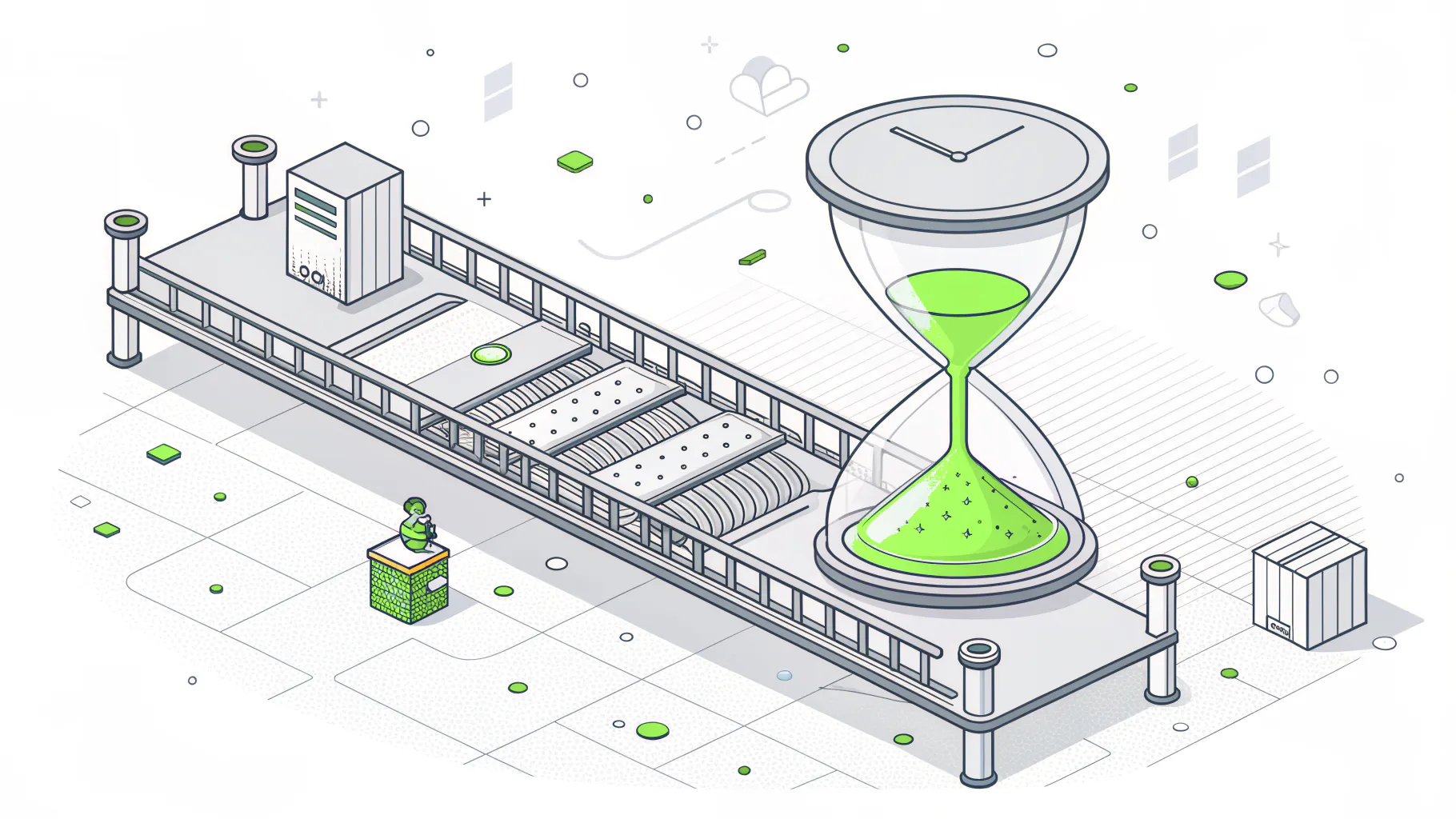
Hour 0-4: Discovery and containment. Someone notices. Maybe an alert fires. Maybe a user reports that files are encrypted. Maybe production systems lock up. IT investigates, confirms ransomware, and starts containment. Systems go offline, sometimes proactively, sometimes because the attacker already took them down.
Hour 4-24: Scope assessment. How far did it spread? What systems are compromised? Is the attacker still inside? Can you trust your backups? This phase is chaotic. Every system is suspect until verified. Production is stopped because you can't risk running compromised systems.
Day 1-3: Notification and mobilization. Legal counsel. Cyber insurance carrier. Forensics team. SEC filing if required. Customer notification if contractual obligations exist. If you have ITAR-controlled data, you may have DDTC notification obligations. If you're in the DoD supply chain, DFARS 252.204-7012 requires notification to the DoD CIO within 72 hours of discovery.
Day 3-14: Recovery begins. Clean systems. Restore from backups. Rebuild what can't be restored. Validate that the attacker is out. Test restored systems before reconnecting them to the network. This is where backup quality makes the difference between a week of downtime and a month.
Week 2-6: Return to operations. Systems come back online in phases. Production restarts cautiously. The forensics investigation continues. Regulatory filings are finalized. Customer communications go out. Insurance claims begin.
Month 2+: Post-incident fallout. Insurance premium increases. Customer trust conversations. Contract implications. Regulatory follow-up. Internal process changes. Psychological impact on the team. Sophos found that 47% of manufacturing IT and cybersecurity professionals reported increased anxiety and stress following a ransomware attack (Sophos, 2025).
Only 35% of ransomware victims fully recovered within one week in 2024. Down from 47% the year before. Recovery is getting slower, not faster.
What Makes Electronics Manufacturing Recovery Harder
A professional services firm that gets hit by ransomware loses access to email and files. That's disruptive. An electronics manufacturer that gets hit loses the ability to produce product. The financial and operational consequences are in a different category.
Production lines stop. If ransomware encrypts MES systems, ERP databases, or production control software, the line stops. You can't run a pick-and-place machine if the MES can't feed it job data. You can't ship product if the ERP can't generate shipping labels. Downtime in semiconductor and electronics manufacturing runs $100K-$500K per hour.
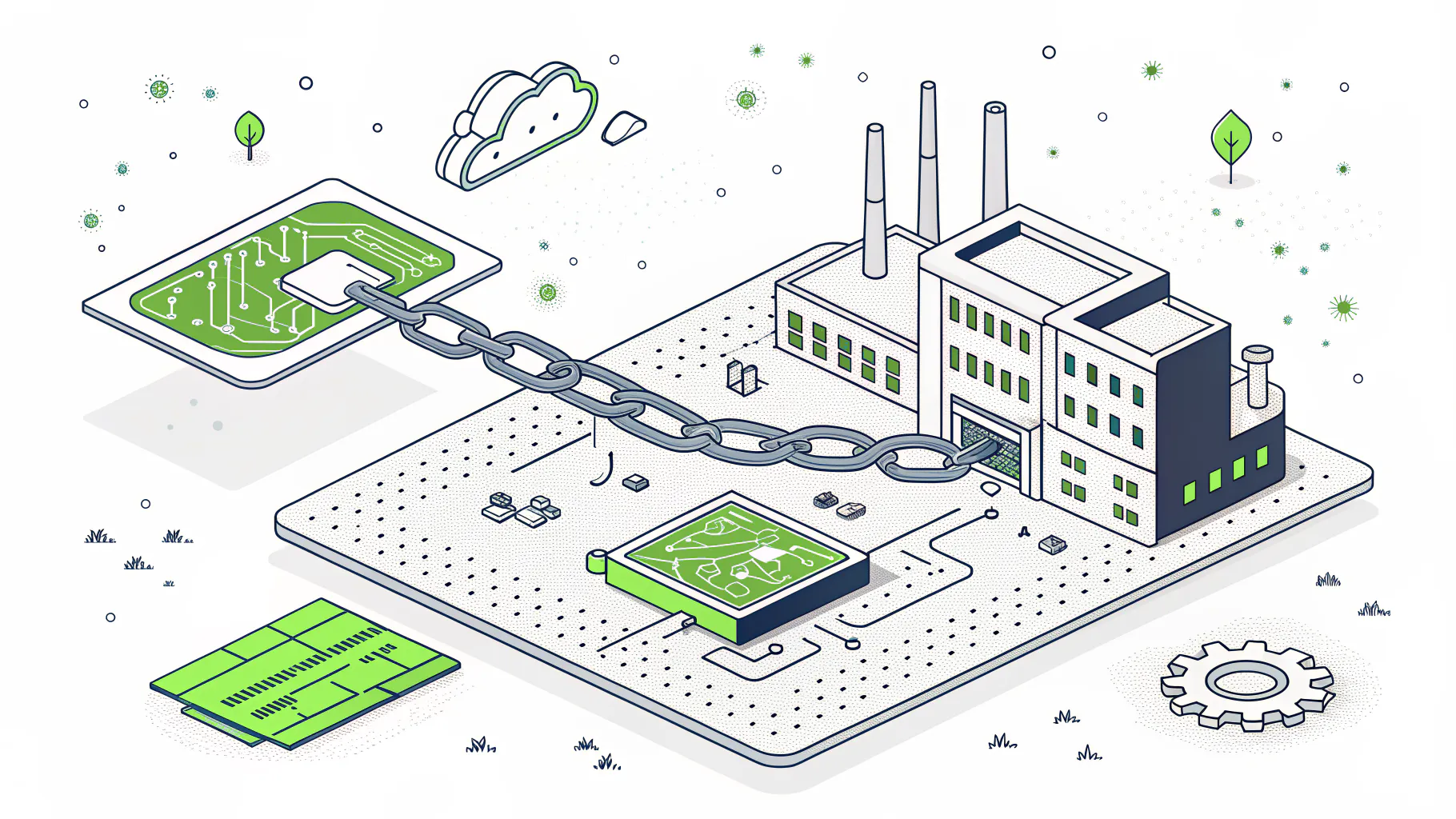
IP may already be gone. Ransomware groups increasingly exfiltrate data before encrypting it. Benchmark Electronics appeared on the Everest ransomware group's leak site with attackers claiming access to 100,000+ files containing internal engineering and manufacturing data (BlackFog, 2026). For a PCB fabricator, that's Gerber files, schematics, and customer design data. Even if you recover operationally, the IP exposure is permanent.
Compliance cascades. If ITAR-controlled data was potentially accessed, you have notification obligations to DDTC. If CUI was compromised, DFARS requires notification to DoD. If customer data was exposed, contractual notification requirements kick in. One ransomware event can trigger multiple simultaneous compliance incidents.
Customer trust erodes. Your OEM customers are already asking about your security posture. A ransomware incident that disrupts their supply chain answers the question for them, in the worst possible way.
Supply chain ripple effect. When Sensata Technologies was hit by ransomware in April 2025, the disruption affected shipping, receiving, and production (CE Interim, 2026). Sensata supplies sensors and controls to automotive, aerospace, and industrial customers. When they stopped, their customers felt it. Your downstream impact may be smaller, but it's real.
The Numbers That Define Manufacturing Ransomware in 2025-2026
Manufacturing ransomware attacks increased 56% year-over-year, rising from 937 in 2024 to 1,466 in 2025 (Check Point Manufacturing Threat Landscape 2026, via Industrial Cyber).
Mean recovery cost for manufacturing: $1.3M, excluding ransom payments (Sophos, 2025).
51% of manufacturing ransomware victims paid the ransom in 2025 (Sophos, 2025).
58% used backups to recover data (Sophos, 2025).
10% of manufacturing attacks in 2025 were extortion-only (data theft without encryption), up from 3% in 2024 (Sophos, 2025). Attackers are adapting. They know manufacturing IP is valuable enough to extort without bothering to encrypt.
And here's the detail that should change how you think about paying. Security researchers at Coveware reported in early 2026 that a memory management flaw in the Nitrogen ransomware group's VMware ESXi encryptor corrupts the encryption key, making decryption mathematically impossible even when victims pay (Halcyon, May 2026). Paying doesn't guarantee recovery. Nitrogen is the same group that hit Foxconn's semiconductor subsidiary in May 2026.
What Determines Whether You Recover in Days or Months
I've watched companies recover from ransomware in under a week. I've watched others take 6 weeks to restore basic operations. The difference isn't luck. It's preparation.
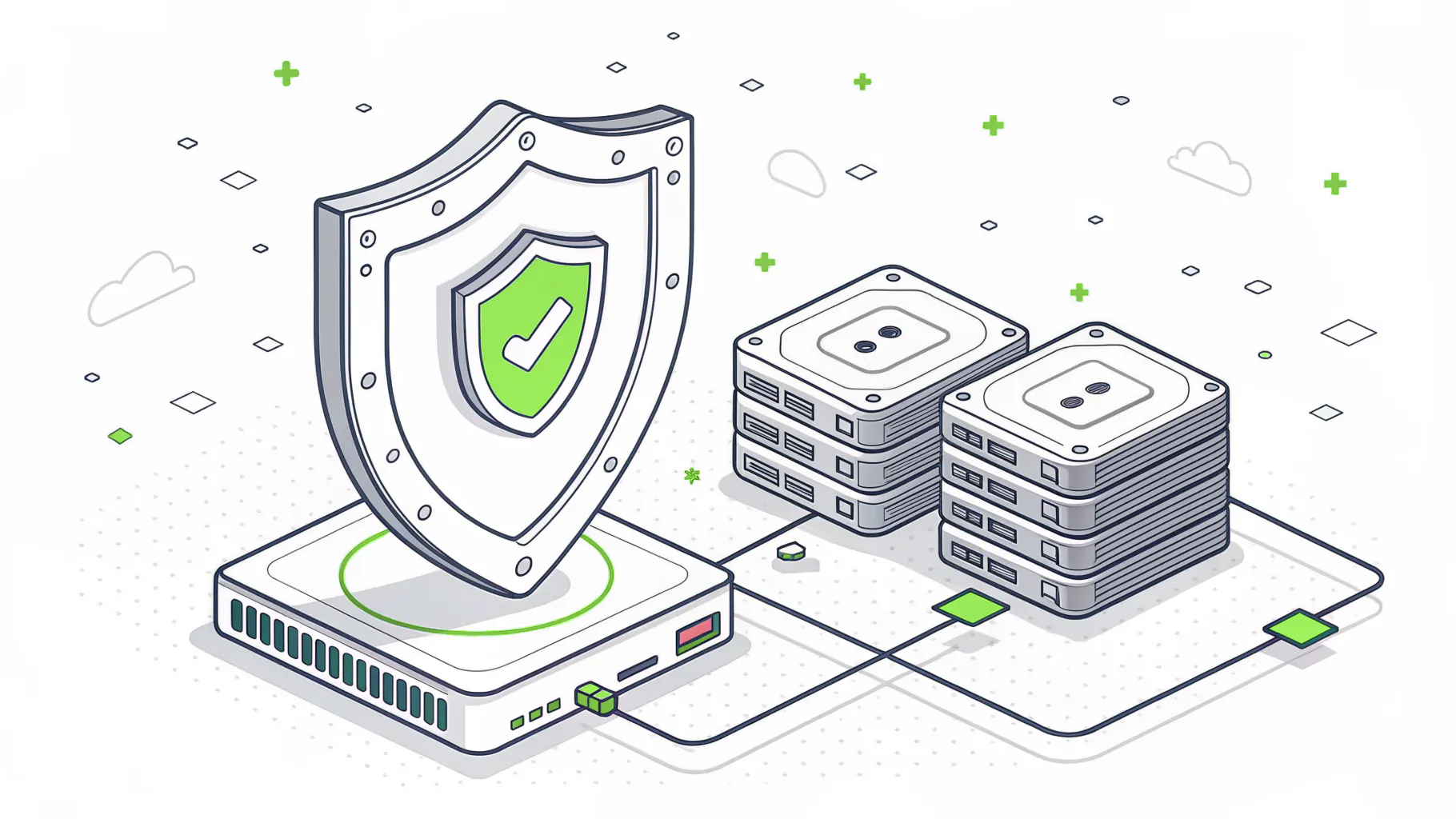
Backup quality and validation. Companies that recover fastest have validated, tested backups with offline or immutable copies. They know their recovery time because they've rehearsed it. Companies that "have backups" but haven't tested a restore in 18 months are rolling the dice.
Network segmentation. If OT and IT are on separate network segments, ransomware that enters through a phishing email on the corporate side can't reach production systems. Segmentation limits the blast radius. Without it, one compromised endpoint can cascade into a full-environment lockout.
Security monitoring. A 24/7 managed SOC catches lateral movement, privilege escalation, and data exfiltration before encryption begins. If you detect the attacker during the reconnaissance phase (which can last days or weeks), you can contain them before they deploy ransomware. If your first sign of trouble is encrypted files, you've already lost.
Incident response plan. Not a plan sitting in a drawer. A plan that's been tested. Tabletop exercises with your IT team, leadership, and legal counsel. Who makes the call to shut down production? Who contacts the insurance carrier? Who handles customer communication? Who coordinates with forensics? If you're figuring this out in the middle of the incident, you're losing time.
Cyber insurance. It doesn't prevent the attack. It covers the cost. Forensics, legal, notification, business interruption, extortion costs. Without it, $1.3M in recovery costs comes out of your operating budget.
The Real Electronics Manufacturer Ransomware Timeline
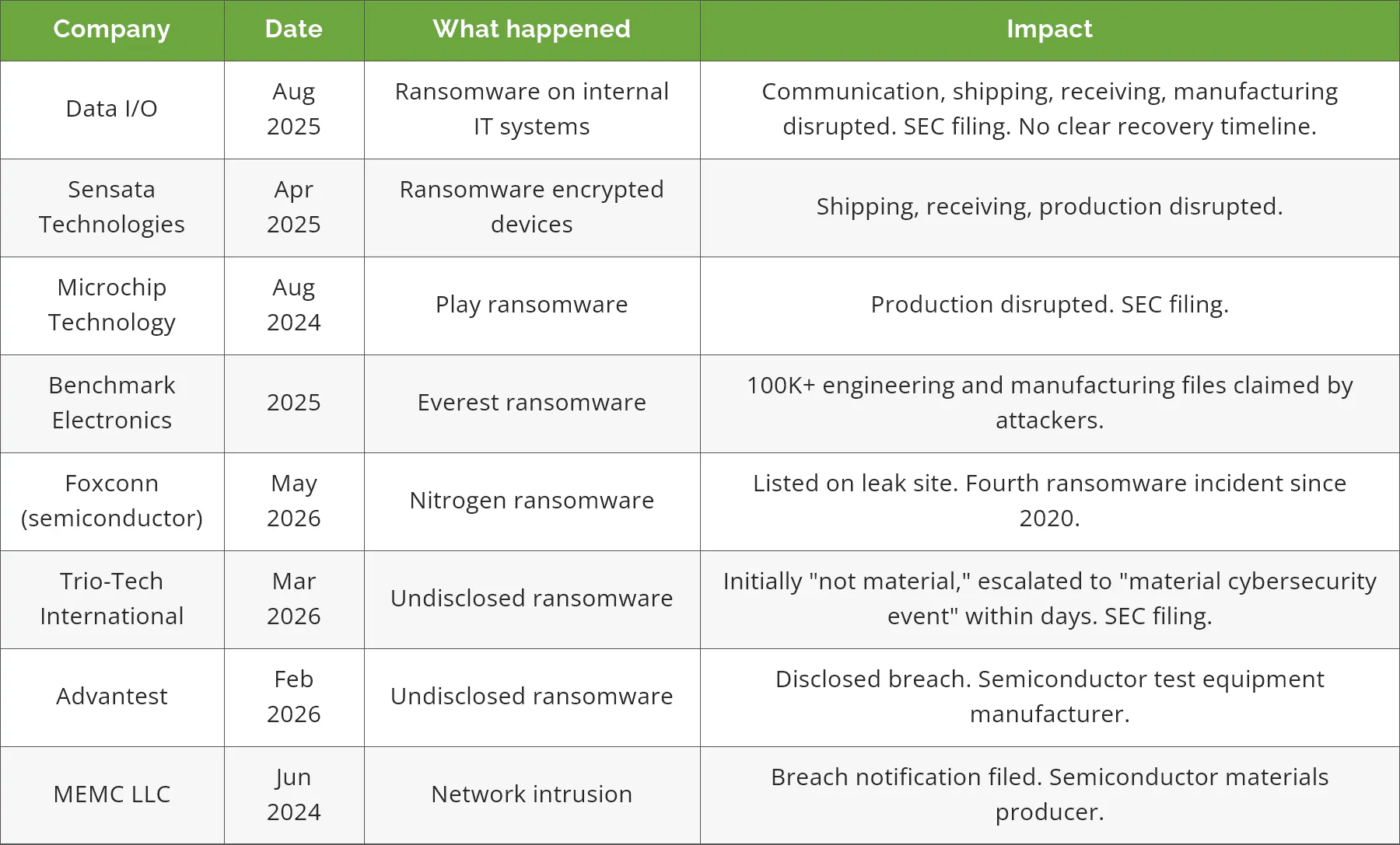
This isn't a projection. These are companies that reported incidents publicly. The ones that didn't report are uncounted.
What to Do Before It Happens to You
Deploy 24/7 security monitoring. A managed SIEM/SOC gives you the detection capability to catch threats before they reach the encryption stage. Your production floor doesn't stop at 5 PM. Neither should your monitoring.
Segment your network. Separate OT from IT. Control cross-zone access. Limit the blast radius of any single compromise.
Validate your backups. Test a full restore. Time it. Document the results. Include offline or immutable copies that ransomware can't reach.
Write and test your incident response plan. Run a tabletop exercise with your IT team, leadership, and legal. Practice the decisions before they're real.
Get cybersecurity built into your IT operations. Not as an add-on. Not as a project. As the foundation. Security-first means the controls are already in place when the attack comes.
Consilien has been doing this for 25+ years. MSP 501 for 2025 and 2026. When an electronics manufacturer asks "what would happen if we got hit?", we'd rather the answer be "not much" than "we don't know".