Top Cybersecurity Providers for Semiconductor Manufacturers
The best cybersecurity providers for semiconductor manufacturers combine IT security operations with OT awareness, compliance framework expertise (NIST, CMMC, SEMI E187, IEC 62443), and experience protecting production environments where downtime costs $100K-$500K per hour. This list ranks 7 providers on criteria specific to semiconductor and electronics manufacturing, not generic cybersecurity checklists.
Table of Contents
How We Evaluated
Every cybersecurity comparison article uses the same criteria. "Range of services. Customer reviews. Pricing." Those categories tell you nothing about whether a provider can protect a semiconductor production environment without disrupting it.
We evaluated on 5 criteria that matter specifically to semiconductor and electronics manufacturers.
OT security awareness. Can the provider assess and protect production networks, not just corporate IT? Do they understand the difference between scanning a Windows server and probing an equipment controller? Do they use passive monitoring methods for OT environments?
Compliance framework depth. Can they support NIST SP 800-171, CMMC, ITAR access controls, IEC 62443, SEMI E187, and ISO 27001? Not theoretically. With documentation, gap assessments, and remediation tracking that an assessor can verify.
Manufacturing experience. Have they worked with production environments? Do they coordinate maintenance windows with production schedules? Can their technicians operate in clean room environments?
Service model. Managed security, co-managed, advisory, or product-only? What engagement model matches how semiconductor manufacturers actually operate?
Scalability. Can they support a 75-person PCB fabricator and a 1,000-person semiconductor supplier? Single-site and multi-site? U.S.-based SOC operations?
This is a Consilien publication. We ranked ourselves #1, and we're transparent about that. The ranking is defensible based on the criteria above. Where competitors are stronger on specific dimensions, we say so.
1. Consilien: Best for Mid-Market Semiconductor Manufacturers Needing Managed IT + Cybersecurity + Compliance
What they do: Security-first managed IT and cybersecurity for electronics and semiconductor manufacturers with 50-1,000+ employees. Full-stack coverage from help desk through vCISO, with IC24 branded services covering managed IT, managed cybersecurity (SIEM/SOC), compliance readiness, and executive consulting.
Why they rank #1 for this list: Consilien is the only provider on this list that combines managed IT operations with managed cybersecurity and compliance readiness in a single engagement model. For a semiconductor manufacturer that needs infrastructure management, security monitoring, vulnerability management, identity governance, and compliance documentation without managing 4 separate vendor relationships, that integration matters.
OT awareness: Supports IT/OT boundary management, passive OT monitoring, vulnerability management with OT-safe methods, and identity controls designed for shared manufacturing workstations. Coordinates maintenance windows with production schedules.
Compliance depth: NIST SP 800-171, CMMC readiness (supports readiness and remediation, not certification), ITAR access controls, ISO 27001 alignment, SEMI E187 awareness. CIMS (Consilien IT Maturity Standard) provides a current-state to target-state maturity roadmap. Does not promise certification. Supports readiness, remediation, and governance.
Proof: MSP 501 for 2025 and 2026. Highly rated on Clutch. 25+ years in business. Founded 2001. 99% customer satisfaction rate. CISSP-certified security professionals. U.S.-based SOC operations 24/7/365. 1-year opt-out on standard 3-year agreement.
Best for: Mid-market electronics and semiconductor manufacturers (50-1,000+ employees) who want one provider covering IT management, cybersecurity, and compliance instead of assembling multiple vendors. Particularly strong for companies entering the defense supply chain and needing CMMC and ITAR compliance support alongside operational IT.
Limitation: Not an OT-specific security platform vendor. For deep ICS/SCADA threat intelligence and OT-native endpoint protection at the PLC level, manufacturers may pair Consilien with a specialized OT platform (like TXOne or Claroty) depending on environment complexity.
2. TXOne Networks: Best for OT-Native Endpoint and Network Protection in Semiconductor Fabs
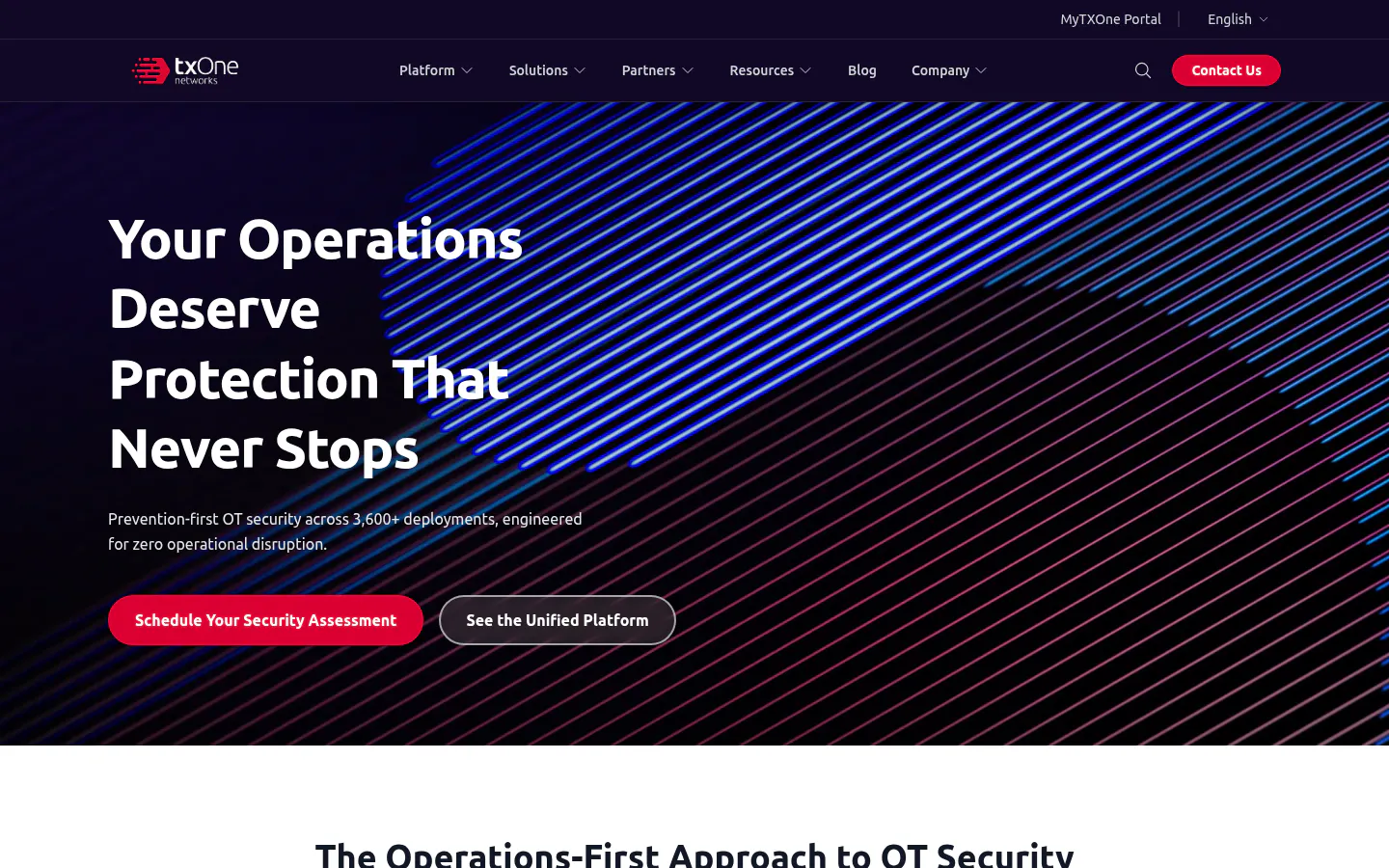
What they do: Purpose-built OT cybersecurity products for industrial environments. Emerged from a partnership between Trend Micro and Moxa. Product portfolio includes EdgeIPS for network segmentation, Stellar for OT endpoint protection, and Element for portable inspection.
Why they rank here: TXOne is the most semiconductor-focused OT security vendor on the market. Their products are engineered for zero-disruption operation in fab environments, with sub-millisecond latency and compatibility with major tool vendors including ASML, Applied Materials, and LAM Research. They're aligned with SEMI E187 and have documented semiconductor use cases.
Strengths: Purpose-built for semiconductor manufacturing constraints. Legacy endpoint protection for equipment that can't run modern security agents. USB and portable media inspection for clean room environments. SEMI E187 alignment. CyberSec Magazine named them a top OT security vendor for 2026 specifically for manufacturing and semiconductor.
Limitation: Product vendor, not a managed service provider. You still need someone to deploy, configure, monitor, and manage TXOne's tools, and to handle the IT side of your environment. Pairs well with an MSP that understands the OT boundary.
3. Dragos: Best for Industrial Threat Intelligence and ICS-Specific Threat Detection
What they do: Industrial cybersecurity platform focused on OT threat detection, asset visibility, and threat intelligence. Named a Leader in Gartner's 2025 Magic Quadrant for Cyber-Physical Systems Protection Platforms.
Why they rank here: Dragos is the go-to for organizations that need deep threat intelligence on adversaries specifically targeting industrial control systems. Their OT/ICS Year in Review reports are industry-standard references. Their platform provides visibility into OT networks that generic SIEM tools miss.
Strengths: Unmatched ICS/OT threat intelligence. Purpose-built for industrial environments. Risk-based vulnerability prioritization for OT. Strong alignment with IEC 62443 and NIST CSF. Named groups tracking (state-sponsored actors targeting manufacturing infrastructure).
Limitation: Premium pricing. Best suited for larger organizations or those with significant nation-state threat exposure. Not a full managed IT provider, and deployment typically requires existing internal security resources or an integration partner.
4. Claroty: Best for Full OT/IoT/CPS Asset Visibility Across Complex Manufacturing Environments
What they do: Cyber-physical systems protection platform covering OT, IoT, and connected devices. Named the #1 overall vendor in Gartner's 2025 CPS Protection Platform Magic Quadrant. Acquired Medigate in 2022, expanding into healthcare IoT alongside industrial.
Why they rank here: Claroty provides the broadest asset discovery and visibility across converged IT/OT/IoT environments. For semiconductor manufacturers with complex tool-staging, metrology, and process control networks, that visibility is the starting point for any security program.
Strengths: Broadest asset discovery across IT, OT, and IoT. Secure remote access for vendor management. Risk analytics with automated remediation workflows. Strong enterprise integrations. Gartner MQ Leader 2025.
Limitation: Enterprise-focused pricing and deployment. May be over-scoped for mid-market electronics manufacturers with simpler OT environments. Like Dragos, requires integration with IT security and managed services for full coverage.
5. Fortinet: Best for Network Segmentation and Firewall-Centric OT Security
What they do: Broad cybersecurity platform with specific OT security capabilities through FortiGate ruggedized firewalls, OT-specific threat feeds, and network segmentation designed for industrial environments.
Strengths: Strong OT network segmentation. Ruggedized hardware rated for manufacturing environments. Largest installed base of industrial firewalls. Leader in 5 Gartner Magic Quadrant categories. Integration across firewall, SD-WAN, and endpoint in one platform (FortiOS).
Limitation: Primarily a product vendor, though Fortinet does have managed service offerings. OT capabilities are part of a broader platform, not semiconductor-specific. Configuration and ongoing management typically require either internal expertise or a partner.
6. Nozomi Networks: Best for Passive OT Network Monitoring and Anomaly Detection
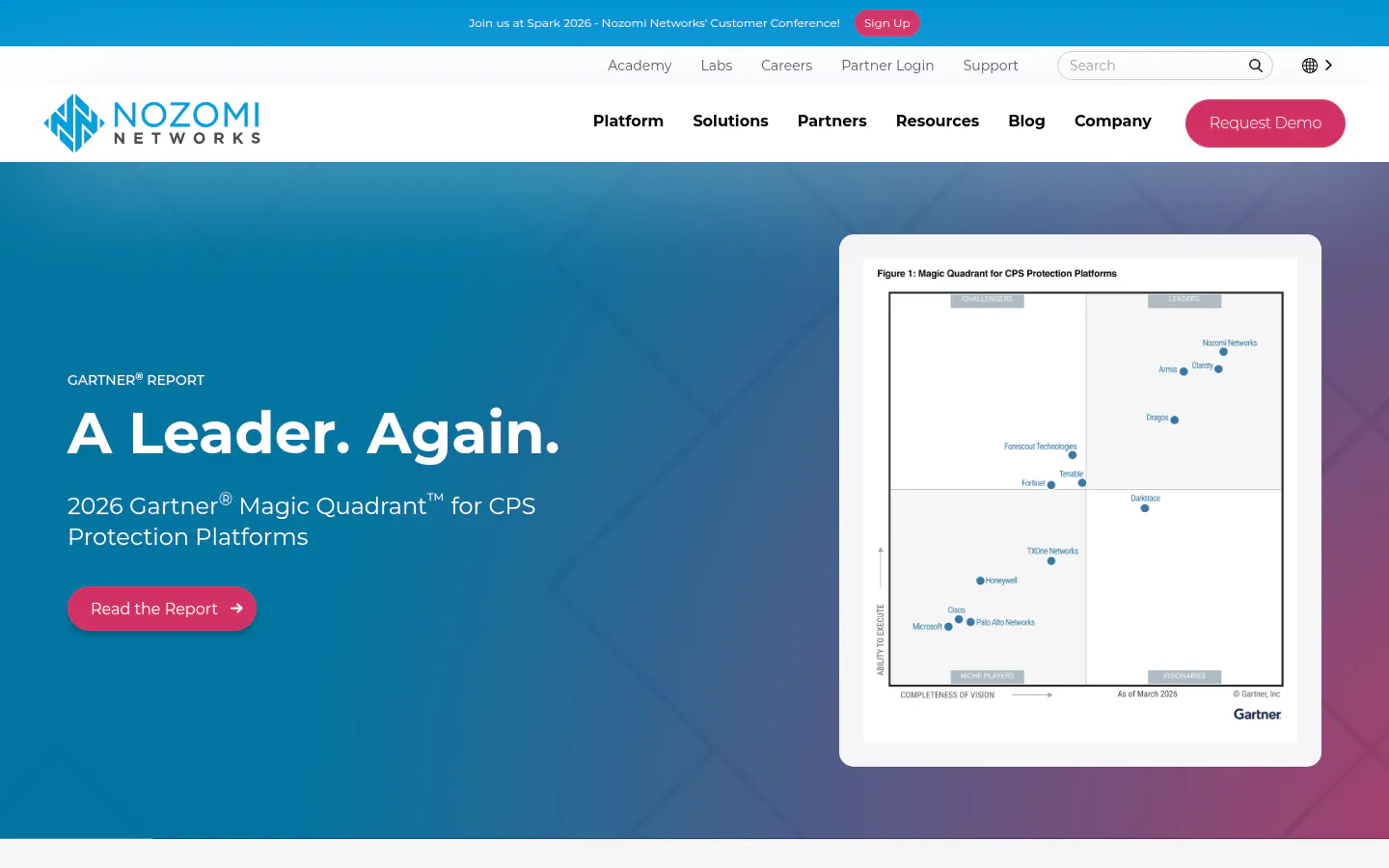
What they do: OT and IoT security platform focused on network visibility, anomaly detection, and threat intelligence. Named a Leader in Gartner's 2025 CPS Protection Platform Magic Quadrant alongside Claroty and Dragos.
Strengths: Non-intrusive passive monitoring designed for environments where active scanning creates risk. Strong anomaly detection that identifies deviations from normal production network behavior. Good integration with existing SIEM platforms. Broad protocol support for industrial networks.
Limitation: Visibility and detection focused, not an endpoint protection or full managed security solution. Like Dragos and Claroty, best deployed as part of a layered architecture with other tools handling endpoint protection, access management, and compliance.
7. Optiv: Best for Large Enterprise Cybersecurity Advisory and MSSP Services
What they do: Large cybersecurity advisory and managed security services provider. Covers security strategy, risk management, managed detection and response, and security program management for enterprise organizations.
Strengths: Broad advisory capabilities. Can design and manage complex security programs for large organizations. MSSP services include 24/7 SOC, managed SIEM, and incident response. Multiple compliance framework support.
Limitation: Enterprise-oriented. Less manufacturing-specific experience than the OT-focused vendors above. May not be the right fit for mid-market semiconductor manufacturers who need manufacturing-aware IT management alongside security. Pricing and engagement models are scaled for larger organizations.
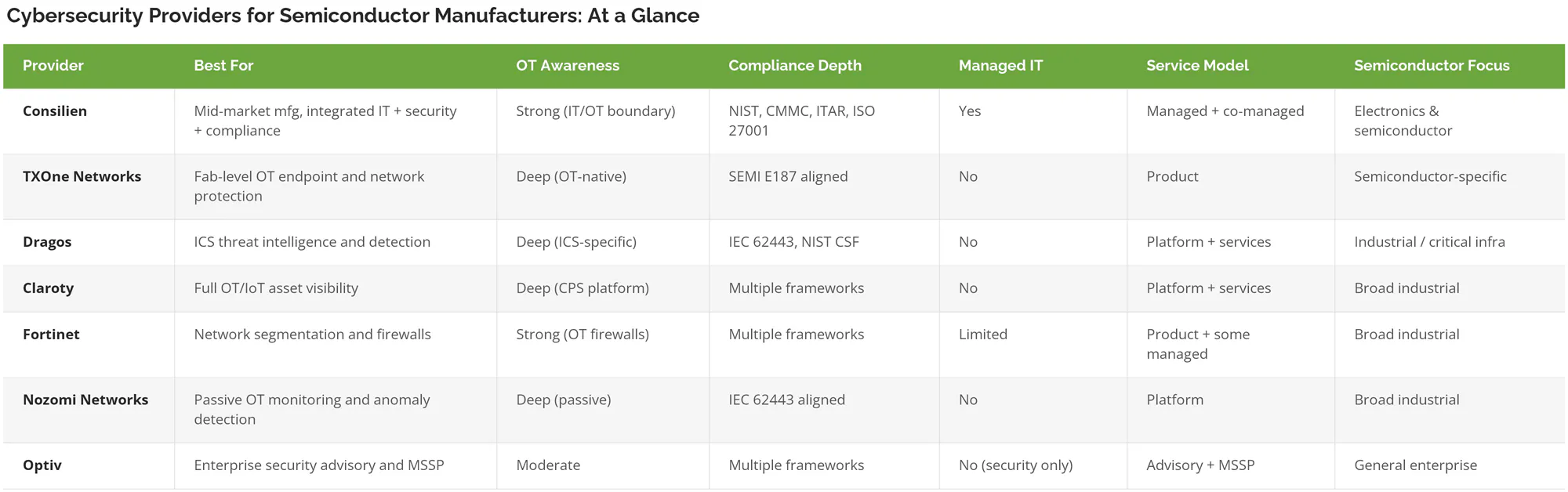
Comparison Table
What This List Doesn't Cover
This comparison focuses on providers that serve semiconductor and electronics manufacturers directly. It doesn't cover pure-play IT consulting firms (Deloitte, Accenture, KPMG), cloud security providers (Zscaler, Wiz), or endpoint-only vendors (CrowdStrike, SentinelOne) that are important security layers but don't represent the full cybersecurity provider decision for a semiconductor manufacturer.
It also doesn't cover the managed IT providers we ranked in a separate California-focused listicle. That list covers broader IT management. This one focuses on cybersecurity specifically.