SASE Explained: How Secure Access Service Edge Works
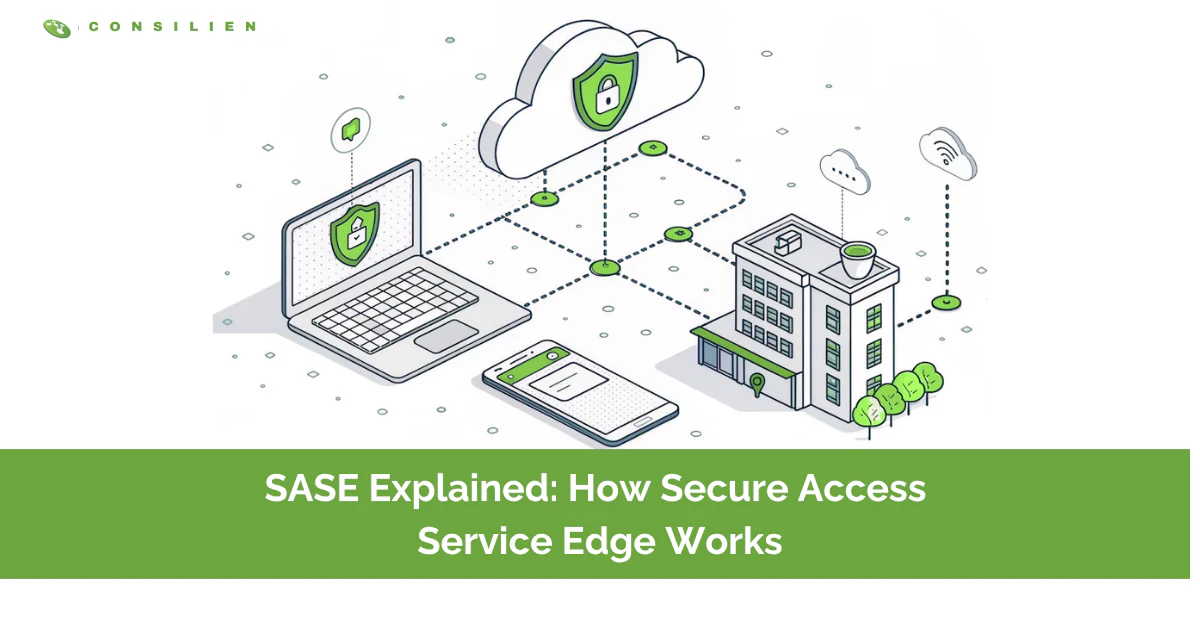
Secure Access Service Edge, or SASE, is a cloud-delivered model that merges your network connectivity and your security into one platform. Instead of hauling traffic back to a data center, it enforces identity-based access at the edge, close to the user. This guide covers what it is, how it works, and where it fits in a broader managed cybersecurity strategy.
Table of Contents
SASE (Secure Access Service Edge) is a cloud-delivered architecture that combines networking with security services, ZTNA, SWG, CASB, and FWaaS, into one platform. It enforces identity-based access at the edge, close to your users, not in a data center.
For years, network security ran on one assumption. Everyone was inside the building. Your people, your applications, and your data all sat behind one firewall, and anything inside that perimeter got trusted by default. Then the building emptied out. Your team went hybrid, your apps moved to the cloud, and your data now lives in places your firewall never sees. SASE is the industry's answer to that shift. Worth understanding before a vendor sells you one.
Here's the honest part most vendor pages skip. SASE isn't a brand-new invention you have to buy. It's a way of converging tools you may already run, VPN, firewall, web filtering, cloud controls, onto one platform that follows the user instead of the office. The word was coined by Gartner in 2019. The problem it solves is older than that.
What Is SASE?
SASE is a security architecture that delivers networking and security together, from the cloud, as one service. It ties access to identity, not location. Who you are and the state of your device decides what you reach, not which network you happen to be on.
Gartner analysts Neil MacDonald, Lawrence Orans, and Joe Skorupa coined the term in a 2019 report called The Future of Network Security Is in the Cloud. The pitch was simple. Stop treating networking and security as two separate stacks bolted together. Converge them into one cloud service that sits between your users and whatever they're trying to reach.
Think of it this way. Your old firewall was the front door of a building. It checked people once, on the way in, then let them wander. SASE is more like a badge that gets re-checked at every room. The badge is your identity. The room is the app. And the guard lives in the cloud, next to the door you're actually walking through, not back at headquarters.
Most companies get one thing backward here. They hear SASE and start shopping for a product. It isn't a product. It's a design goal that several products add up to.
How SASE Actually Works
SASE works by moving security enforcement off your hardware and into cloud points of presence spread around the world. A user connects to the nearest one. That node checks identity, applies your policies, inspects the traffic, and routes it on. The office stops being the center of the map.
Picture the old setup. A remote worker opens a VPN, tunnels all the way back to the corporate data center, gets inspected there, then gets pushed back out to a cloud app that might be hosted three miles from where they started. That's called backhauling. It's slow, it's expensive, and it made sense only when the apps lived in that same data center. They don't anymore.
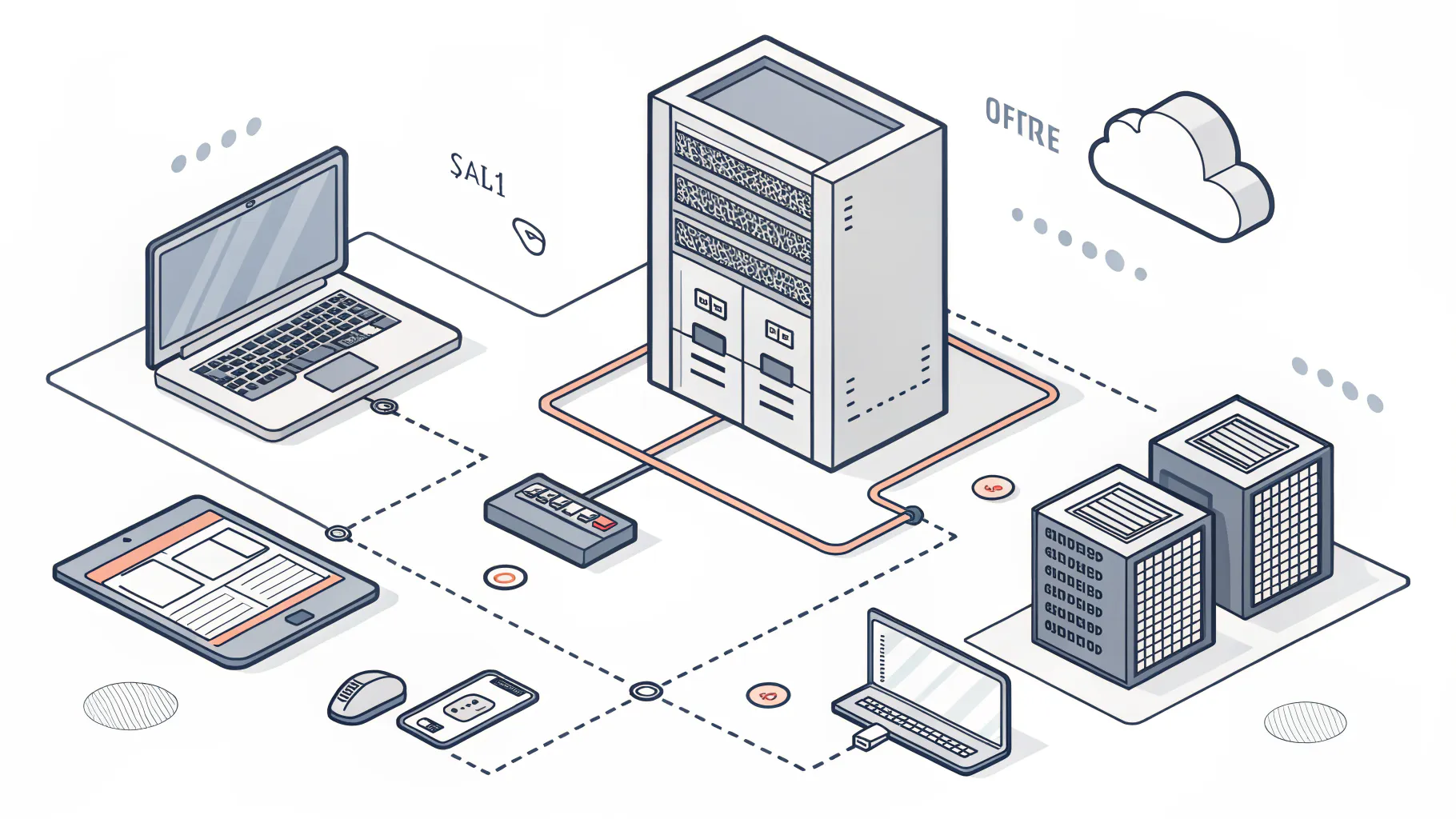
SASE flips it. The security follows the person. Someone logs in from a hotel, a branch, or their kitchen, and the closest cloud node does the work. Same policies everywhere. Same inspection everywhere. No round trip.
Two things drive every decision in that model. Identity, and context. Identity is who's asking. Context is everything around the request, device health, location, time, behavior. A finance manager on a company laptop in the morning gets one answer. The same login from an unmanaged phone in another country at 3am gets a different one. That live, per-request judgment is the whole point, and it's why SASE leans so heavily on strong identity and access management underneath.
The delivery layer matters too. Because it all runs from the cloud, SASE pairs naturally with the way distributed teams already work, which is a big reason it shows up alongside modern cloud services rather than replacing them.
The Core Components of SASE
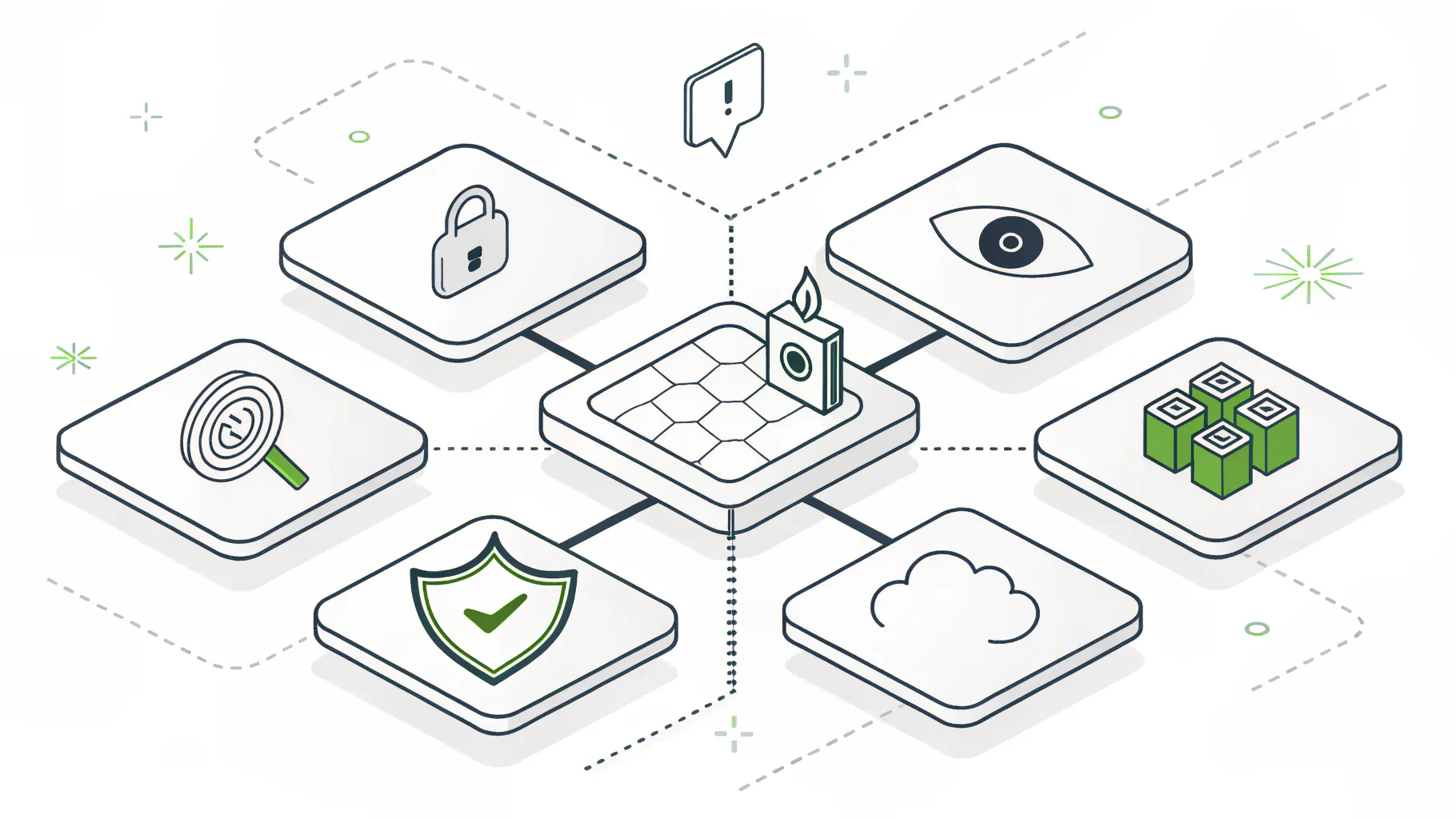
SASE is built from five pieces. One handles the networking. Four handle the security. When a vendor says single-vendor SASE, they mean all five delivered from one platform and one console.
- SD-WAN is the networking piece. It's software-defined routing that steers traffic over the best available path in real time and prioritizes critical apps, replacing the rigid MPLS circuits and manual router setup you would otherwise run at every branch.
- ZTNA handles access. It grants entry to one application at a time based on verified identity and device state, then keeps re-checking, instead of the VPN habit of dropping you onto the whole network at once.
- SWG filters your web traffic. It blocks malicious sites and enforces acceptable-use rules from the cloud, so coverage follows the user rather than living in an on-prem proxy that only sees office traffic.
- CASB watches your cloud apps. It gives visibility and control over SaaS, catches shadow IT, and enforces data-loss rules on what leaves, closing the blind spots around tools nobody officially approved.
- FWaaS delivers the firewall from the cloud. Inspection and intrusion prevention run as a service instead of a physical box you patch and babysit at every site.
ZTNA is the one people fixate on, and for good reason. It's the applied form of zero trust, a laptop gets access to the payroll app and nothing else, and that access gets re-evaluated every time the conditions change. According to Fortinet, this identity-first model is exactly why SASE keeps eating into the old VPN market.
Do you need all five on day one? No. Almost nobody deploys the full stack at once. That matters more than the acronyms, and we'll come back to it.
SASE vs SSE, Does the Difference Matter?
SSE (Security Service Edge) is the security half of SASE without the networking. Same four security services, ZTNA, SWG, CASB, FWaaS, minus the SD-WAN. Palo Alto Networks frames it cleanly. SASE secures the user and optimizes the network. SSE just secures the user.
For a lot of smaller companies, SSE is where they actually start. They don't have a rat's nest of branch circuits that needs SD-WAN. They have people, laptops, and cloud apps. So they buy the security edge first and skip the networking piece until they need it. Nothing wrong with that. The label matters less than what your environment actually requires.
Why SASE Is Replacing the VPN-and-Firewall Model
SASE is replacing the old model because the old model trusts too much and sees too little. A VPN drops a user onto your whole network. If that account or that VPN appliance gets compromised, the attacker inherits the same broad access. And VPN appliances get compromised constantly.
This isn't theoretical. In 2025, CISA issued an emergency directive over zero-day flaws in Cisco ASA VPN devices that a state-sponsored group was actively exploiting to plant malware and run commands. Around the same window, CISA ordered agencies to patch a Check Point VPN zero-day being used by ransomware crews to break in. Two different vendors. Same story. The remote-access box everyone trusted became the way in.
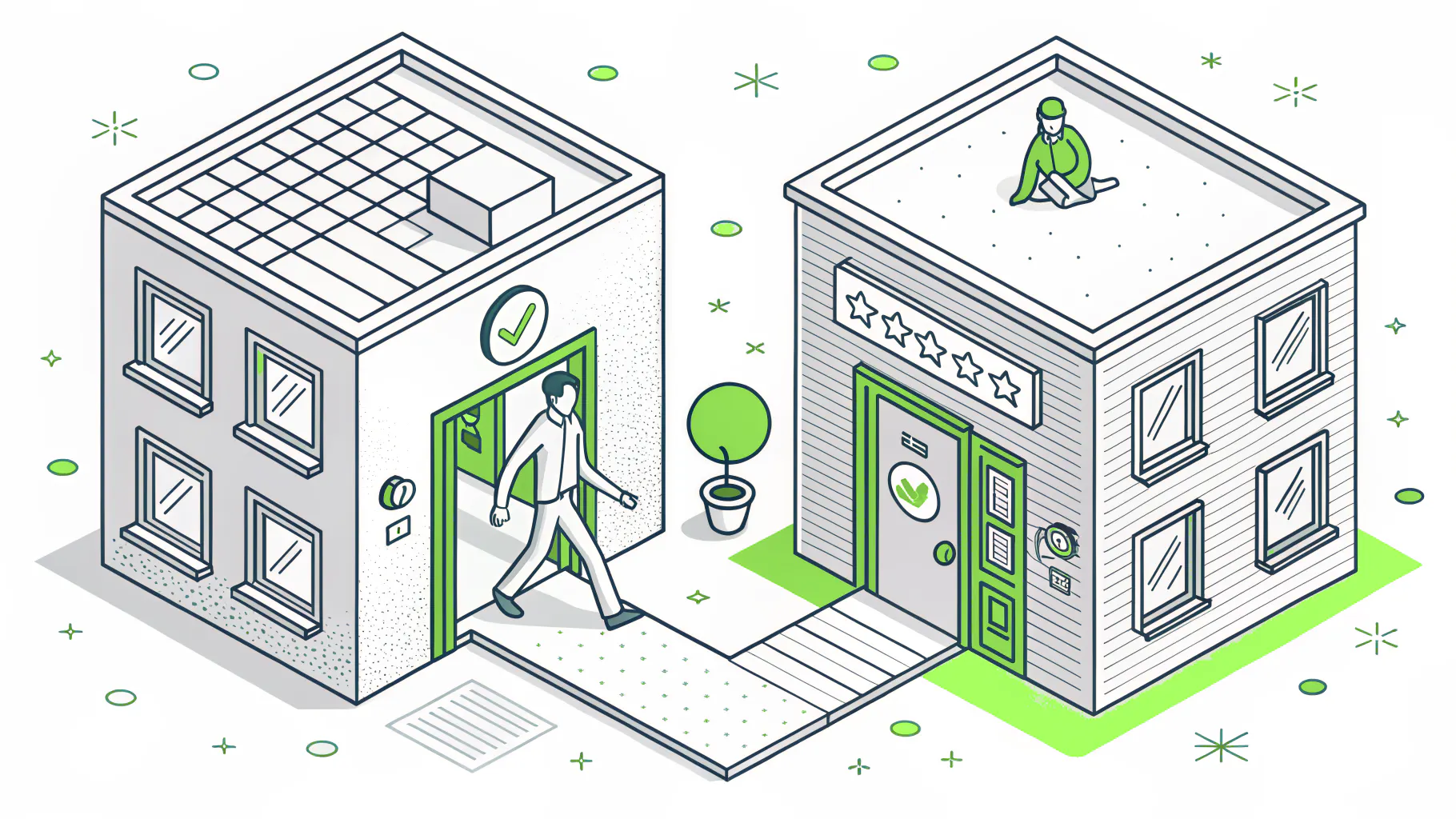
That's the structural problem. A VPN is a tunnel to the network. Zero trust access is a tunnel to one app. When the first one breaks, an intruder gets the building. When the second one breaks, they get a single room, and the badge check already flagged that the device looked wrong.
The firewall-in-a-box model has the same gravity problem. It assumes traffic comes to it. But your traffic scattered years ago. A 60-person distributor with three sites and a warehouse crew on tablets isn't running everything through the Torrance office anymore. Pinning security to a location that most of your work no longer passes through is how gaps open. We see it constantly during assessments, one hardened office and a soft, half-monitored everywhere-else.
Do You Actually Need SASE?
Maybe. SASE fits companies with a distributed workforce, heavy cloud use, and an aging VPN they don't trust. If your team is fully in one office running local apps behind one firewall, you can wait. Fit matters more than hype.
Let me disclose the obvious bias first. We're a managed IT and security provider, so of course a security architecture sounds appealing to us. But I'll tell a client to hold off when the pieces don't line up, because selling somebody a full SASE rollout they don't need is how you lose them in year two.
Here's the honest read on the category. Critics have a point. When SASE first landed, analysts at IDC and IHS Markit pushed back that it was neither a new market nor a new technology, just existing tools with one management layer. They weren't wrong. Much of SASE is repackaging. That doesn't make it worthless. Convergence is genuinely valuable when it kills complexity. It's a problem only when a vendor charges invention prices for integration.
SASE probably earns its keep if a few of these are true for you.
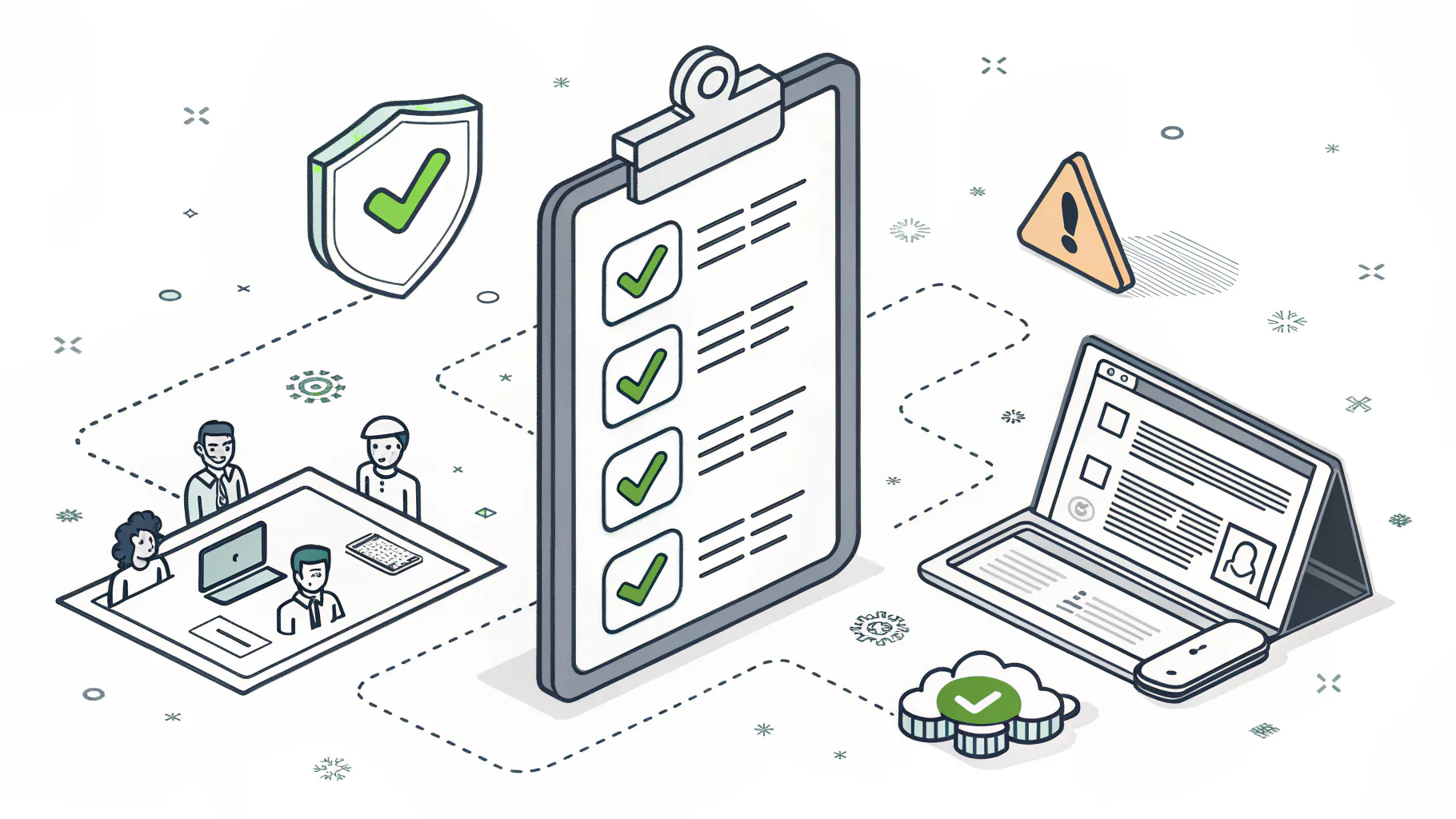
- Most of your team works outside a single office, at least part of the week.
- Your critical apps are Microsoft 365, Salesforce, or other SaaS, not something humming in a server closet.
- The VPN is a running joke, slow, flaky, and quietly terrifying every time a new CVE drops.
- You're stitching together five security consoles that don't talk to each other.
- Compliance auditors keep asking how you control access to data that lives everywhere.
And you can probably wait if your people are in one place, your apps are local, and your access needs are simple. There's no prize for adopting an architecture built for a problem you don't have. The market's growing fast either way, Gartner projects the SASE market will hit roughly $28.5 billion by 2028 at a 26% annual growth rate, but market size is a reason vendors are loud, not a reason you specifically need it this quarter.
How to Move Toward SASE Without Ripping Everything Out
You don't deploy SASE. You migrate toward it, one component at a time, usually starting with the piece that hurts most. For most mid-market companies that's remote access, so you swap the VPN for ZTNA first and grow from there.
Nobody sane rips out a working network on a Friday and bolts on a full SASE stack by Monday. The teams that do this well treat it as a sequence. Replace the VPN with zero trust access. Get consistent web filtering everywhere. Fold in cloud app control. Add SD-WAN when your circuits actually justify it. Each step stands on its own and pays off before the next one starts.
The other early fork is how many vendors you use. Single platform, or best-of-breed pieces stitched together?
For a large enterprise with a deep security team, best-of-breed can win, they've got the staff to integrate it and the appetite for the sharpest tool in every category. For a smaller org, that math flips hard. The marginal gain from the best individual product gets eaten alive by integration work and human error when a two-person IT team is hand-syncing policies across five consoles. The data backs the instinct, 32% of organizations with 100 to 999 employees expect to consolidate onto one or two SASE vendors, versus just 11% of companies with 1,000-plus. Smaller teams want fewer moving parts. Reasonable.
This is also where a managed provider earns its spot. SASE isn't set-and-forget. Policies drift, device posture rules need tuning, and someone has to actually watch what the platform flags. Consilien serves companies in the 20 to 500 user range, and for a team that size, the realistic choice usually isn't DIY SASE versus nothing. It's a converged platform someone runs for you, tied into managed detection and response so a flagged login turns into a contained laptop instead of an ignored alert. The architecture only helps if somebody's home when it fires.
The Bottom Line on SASE
Strip away the acronym soup and SASE is three ideas. Security and networking, converged onto one cloud platform. Access tied to identity and device, not to the network you're plugged into. And enforcement that follows the user instead of waiting back at the office. That's it.
It's not magic and it's not mandatory. It's a sensible response to the fact that your people and your data left the building years ago. If your VPN scares you, your apps live in the cloud, and your team is spread out, it's worth a serious look. If not, hold your money.
Not sure which camp you're in? That's the useful conversation to have before you spend anything. If you're weighing whether SASE, or just a cleaner slice of it, fits your environment, speak to a cybersecurity expert who'll tell you when you don't need the whole stack.